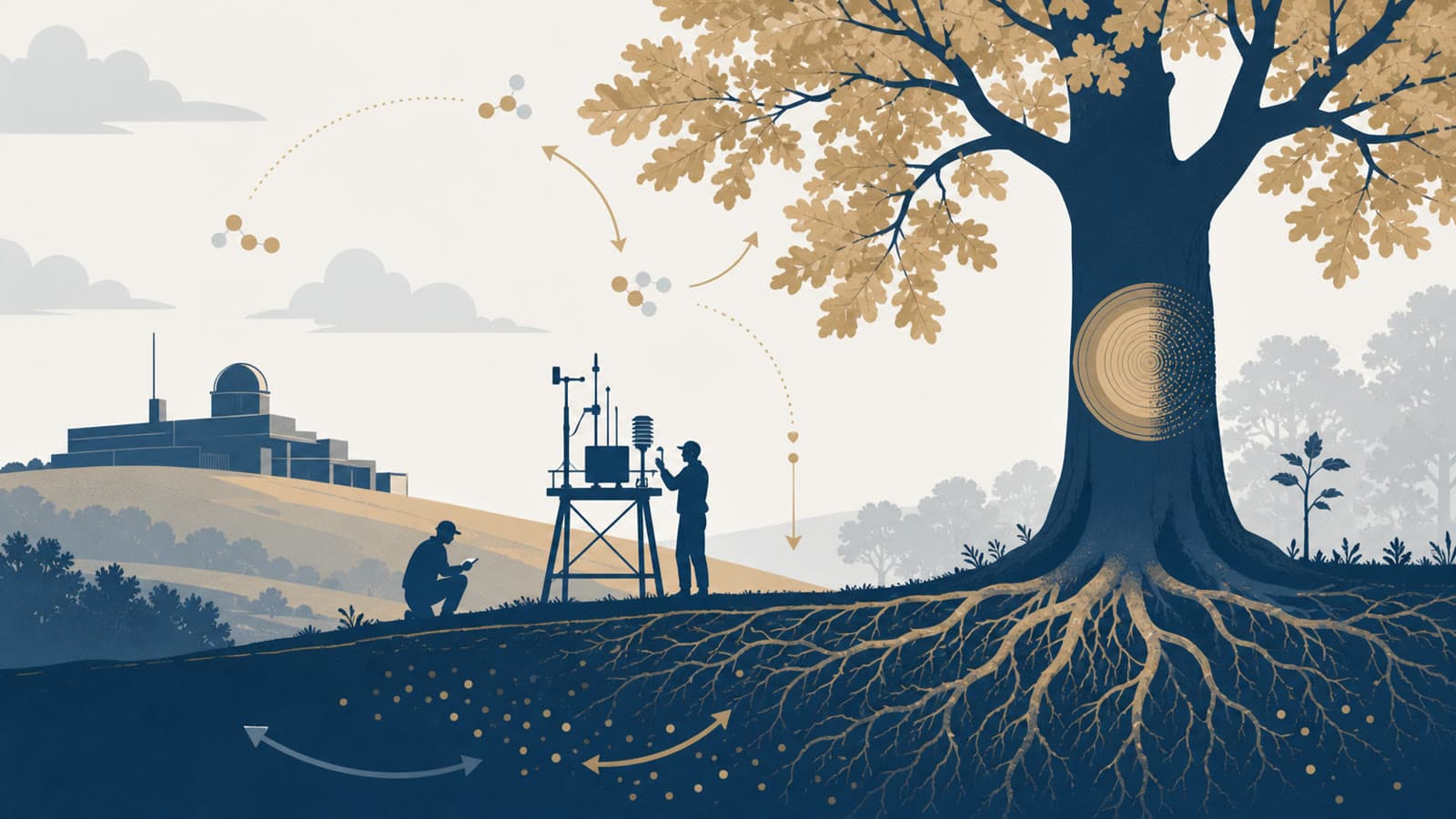
The study, led by Mukund Palat Rao of Columbia University's Lamont-Doherty Earth Observatory, estimated daily photosynthesis and growth timing across 137 oak sites using satellite-derived gross primary productivity, canopy carbon-dioxide measurements, trunk sensors, tree-ring records and temperature data, according to the Science Advances paper and Columbia Climate School's release. Gross primary productivity means the carbon taken up through photosynthesis before subtracting what plants respire back to the atmosphere.
The researchers found that oak growth in the eastern sites generally occurred from May through July, while photosynthesis continued into October, Columbia and EurekAlert said. At those sites, about 36% of annual carbon assimilation through photosynthesis occurred after growth stopped. At California sites, oak growth ran mainly from December through April, slowed in summer and ceased by August, while photosynthesis continued; about 26% of annual carbon uptake occurred after growth ceased.
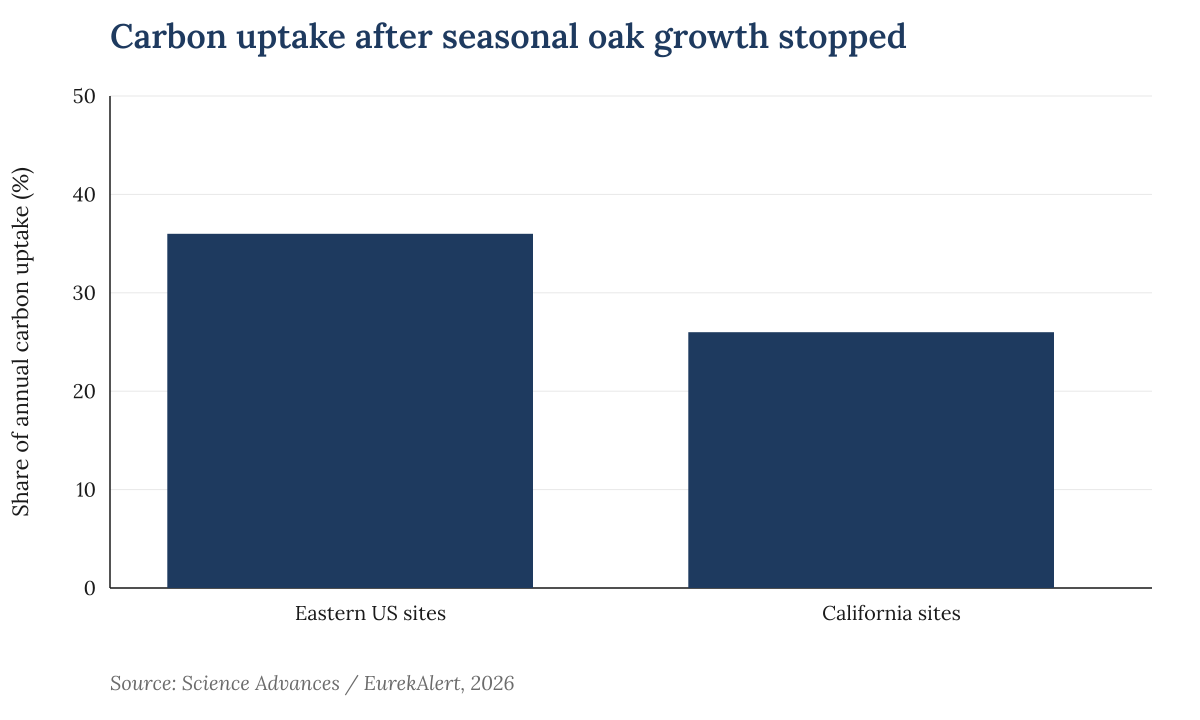 Carbon uptake after seasonal oak growth stopped. Source: Science Advances / EurekAlert, 2026.
The central distinction is between carbon uptake and carbon storage. Trees use photosynthesis to take in carbon dioxide, but long-lived climate storage depends partly on how much of that carbon becomes woody biomass rather than leaves, roots, fruit, stored sugars or respiration. The Science Advances authors wrote that Earth-system models that assume a tight link between photosynthesis and growth may overestimate future forest carbon sequestration as atmospheric moisture demand rises.
The mechanism identified in the study is water stress. EurekAlert quoted Rao as saying that when conditions become dry and hot, growth can stop quickly while photosynthesis continues at a lower rate. Columbia said aridity and heat limited growth more strongly than they limited photosynthesis, which matters because hotter and more variable conditions are expected to become more common as the climate warms.