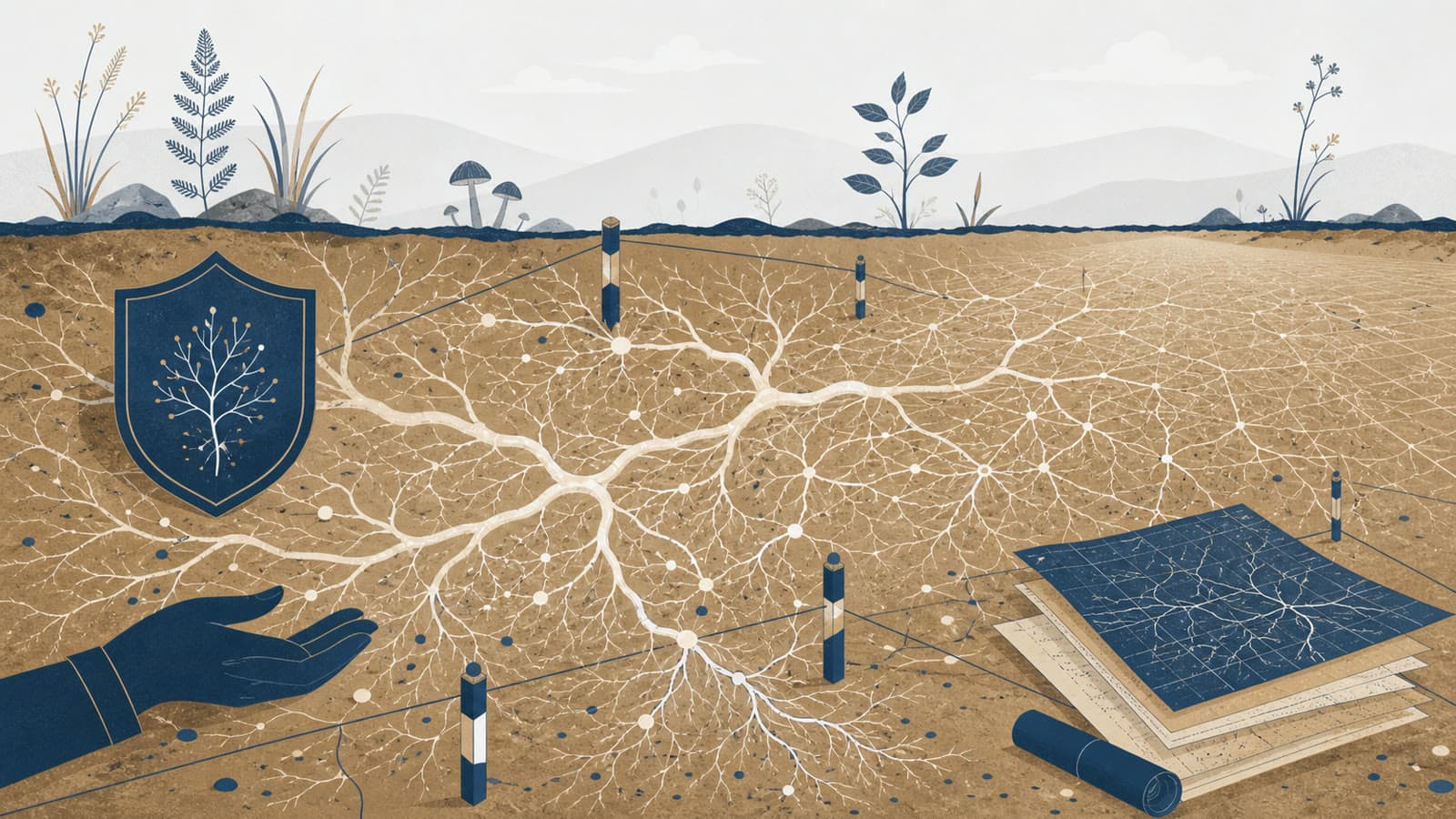
The University of Sheffield said the work mapped the global distribution and mass of arbuscular mycorrhizal fungal networks for the first time. The study link provided by the university identifies the Science paper by DOI, 10.1126/science.adu4373.
Arbuscular mycorrhizal fungi form networks of tubular cells called hyphae. The University of Sheffield and EurekAlert release said these fungi form symbiotic relationships with about 70% of plant species, supplying water and nutrients in exchange for carbon produced by plants.
The headline number is a model estimate, not a direct measurement of every soil system. EurekAlert said the researchers assembled density data from more than 16,000 soil cores and used machine-learning models, with data layers covering ecosystems from deserts and tundra to forests, to predict network density in unsampled ecosystems. It also said the team calibrated the model with robotic imaging of more than 300,000 living fungal hyphae grown in the lab.
The researchers estimated the networks have a total length of about 110 quadrillion kilometres and a mass of about 300 megatons of carbon, according to EurekAlert. The University of Sheffield release put the mass at about 4 billion tonnes; the difference appears to reflect different ways of describing total fungal mass and carbon-equivalent cycling, so this draft uses the carbon-mass figure only where it is tied to the EurekAlert release.
The model also produced a land-use comparison. EurekAlert said grassland ecosystems hold an estimated 40% of Earth's arbuscular mycorrhizal fungal infrastructure and that large-scale agricultural croplands are predicted to have about 50% lower network densities. The Guardian reported a more specific cropland estimate of 47.3% lower density than wild ecosystems.
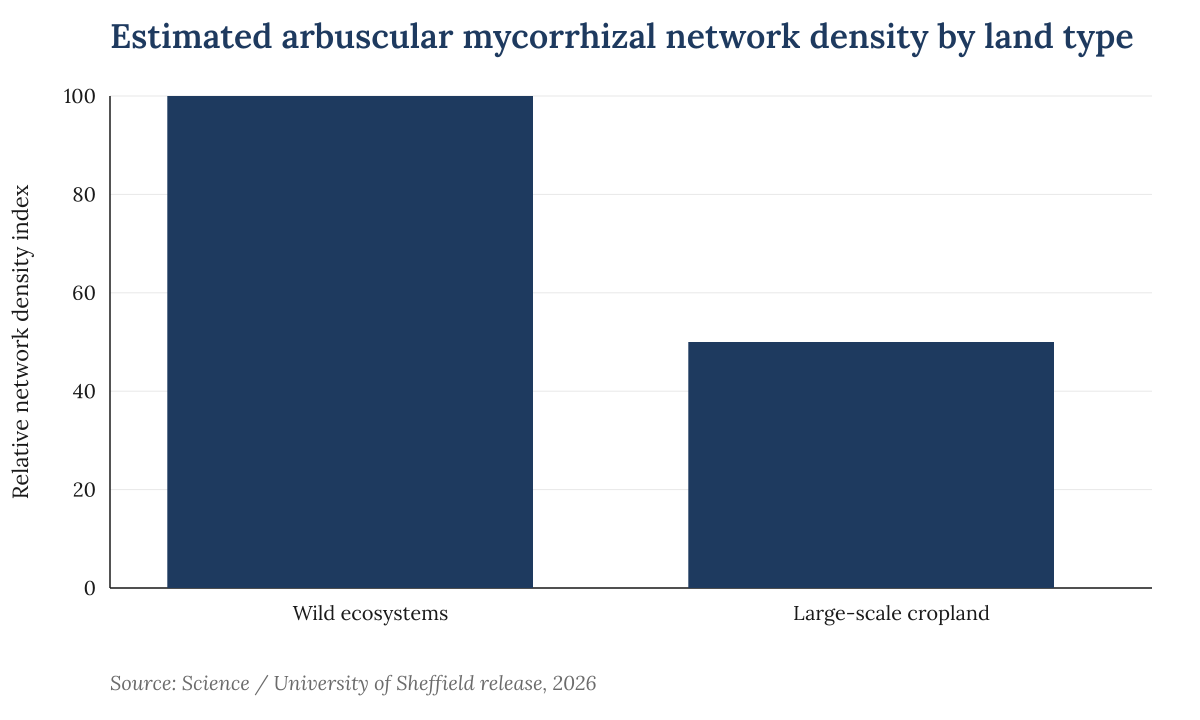 Estimated arbuscular mycorrhizal network density by land type. Source: Science / University of Sheffield release, 2026.