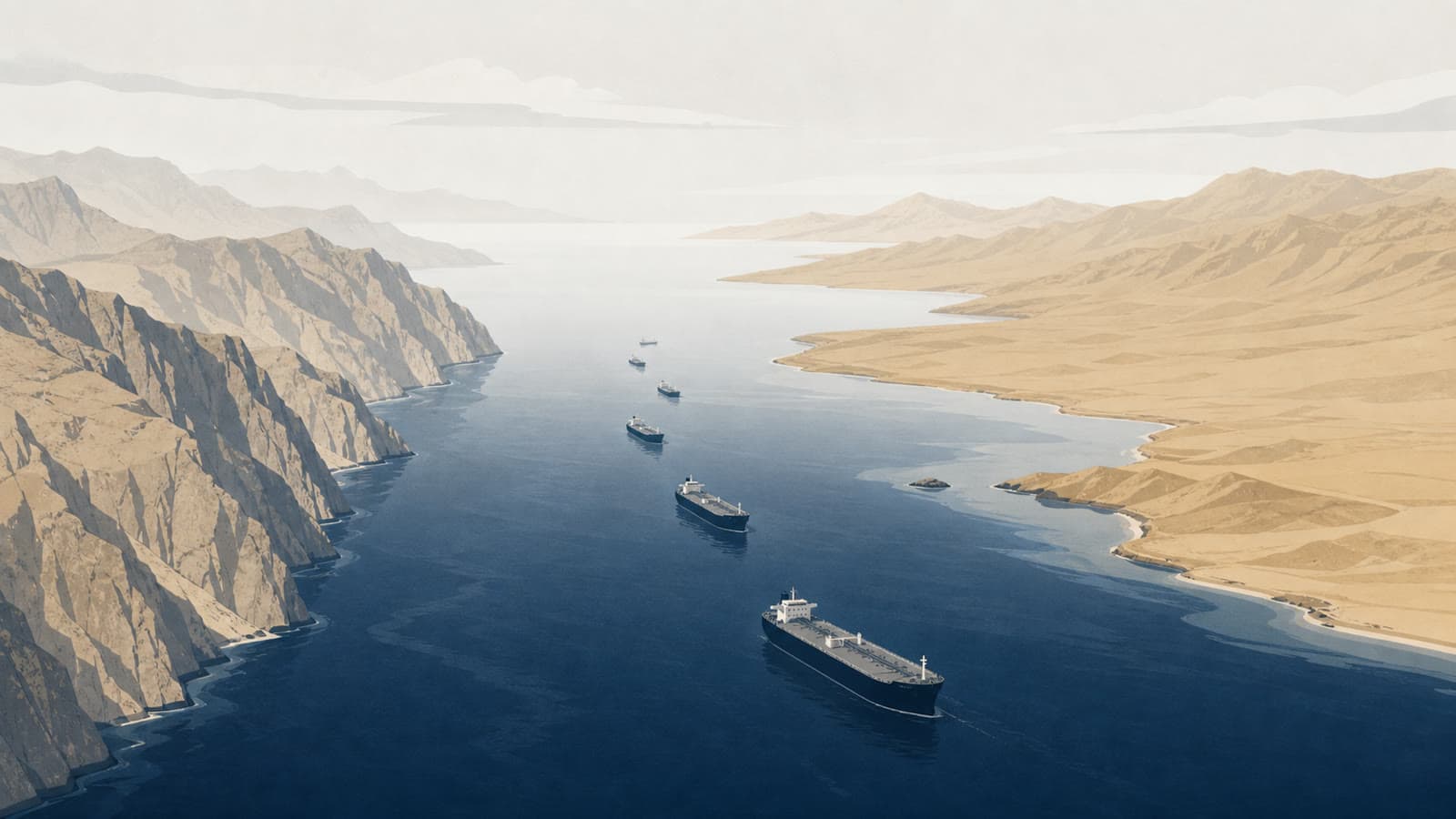
Al Jazeera reported that President Donald Trump announced a ceasefire deal and said shipping through the Strait of Hormuz would begin. It also reported that Iran's deputy foreign minister Kazem Gharibabadi confirmed the agreement. CBS News reported that Pakistani Prime Minister Shehbaz Sharif said the deal would include the immediate and permanent termination of military operations and that a signing ceremony was expected on 19 June in Switzerland.
Those accounts establish announced terms, not proof of implementation. The briefed terms include a halt to military operations, reopening of the Strait of Hormuz and mediation by Pakistan, with Qatar also cited in the Guardian's live coverage. This article therefore treats the deal as announced and pending documentary confirmation, not as a fully implemented maritime-security arrangement.
The Strait of Hormuz point matters because reopening a shipping lane is not completed by a political announcement alone. A shipping route can require naval orders, mine-clearance statements, insurer and port guidance, and notices from maritime authorities before commercial traffic can be described as normal. No International Maritime Organization or UK Maritime Trade Operations notice confirming a completed commercial reopening was found during checks for this draft, so the article does not state that shipping has resumed.
The strongest caution comes from the absence of a published text. The U.S. State Department homepage showed Iran-related material on 14 June, but the checks for this draft did not locate a treaty text, memorandum or detailed State Department statement setting out signing authority, sanctions language, verification arrangements or maritime-security provisions. Those omissions are material because each would affect whether the announcement is a ceasefire, a framework or a binding agreement.