The local Starbucks operator said on 15 June that stores across South Korea would close at 3pm on 22 June so staff can receive history-awareness and social-sensitivity training, the Associated Press reported. Al Jazeera, citing Shinsegae Group, said the closure would be the first simultaneous early shutdown of the chain's South Korean stores since Starbucks entered the country in 1999.
The measure follows a May campaign promoting "SS Tank" tumblers on 18 May, the anniversary of the 1980 Gwangju pro-democracy uprising. AP reported that the promotion was widely read in South Korea as mocking victims of the military crackdown in Gwangju, where troops were deployed against protesters. Al Jazeera described the uprising as a catalyst in South Korea's democratisation, while the Straits Times said the campaign touched a date associated with an official death toll of 165 civilians, with many in South Korea believing the real toll was higher.
Shinsegae's response has moved beyond apology into operational repair. AP reported that Shinsegae Group owns a 67.5% stake in Starbucks Korea and said executives and headquarters staff would attend training led by history and sociology professors. The Hankyoreh reported that Shinsegae plans separate sessions for E-Mart division executives and Starbucks Korea headquarters staff on 17 June, store-partner video training on 22 June, and a session for chairman Chung Yong-jin and affiliate chief executives on 24 June.
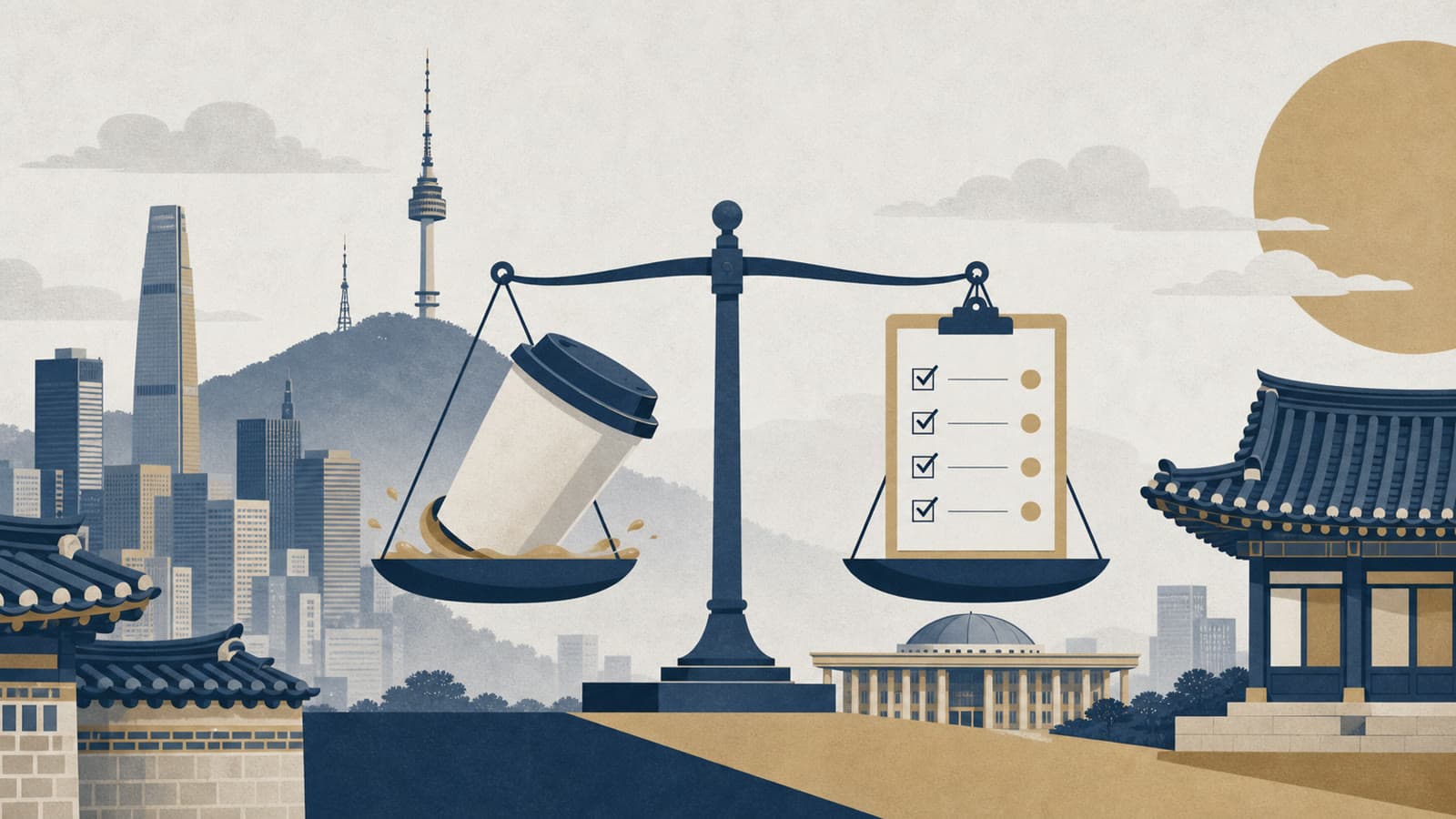
That sequencing matters. A customer-facing closure is conspicuous, but the governance failure sat upstream: the campaign was conceived, approved and released without anyone with authority treating the date, wording and visual idea as a material risk. Yonhap reported that Starbucks Korea would overhaul its marketing decision-making system from planning through approval and execution. The Hankyoreh said the company plans to introduce an externally advised social-sensitivity checklist covering history, commemorative dates, politics, disasters, military issues, gender, violence and hate speech, with quality and legal departments included in final reviews before campaigns go live.
For a licensed global brand, that is the business story. Starbucks Korea is not merely correcting a tone error; it is admitting that its control system did not catch a locally obvious hazard. The Straits Times, citing AFP, reported that Shinsegae had identified negligent acts before the promotion, including sign-offs without checking the design file and no legal review. Those are process defects, not matters of taste.