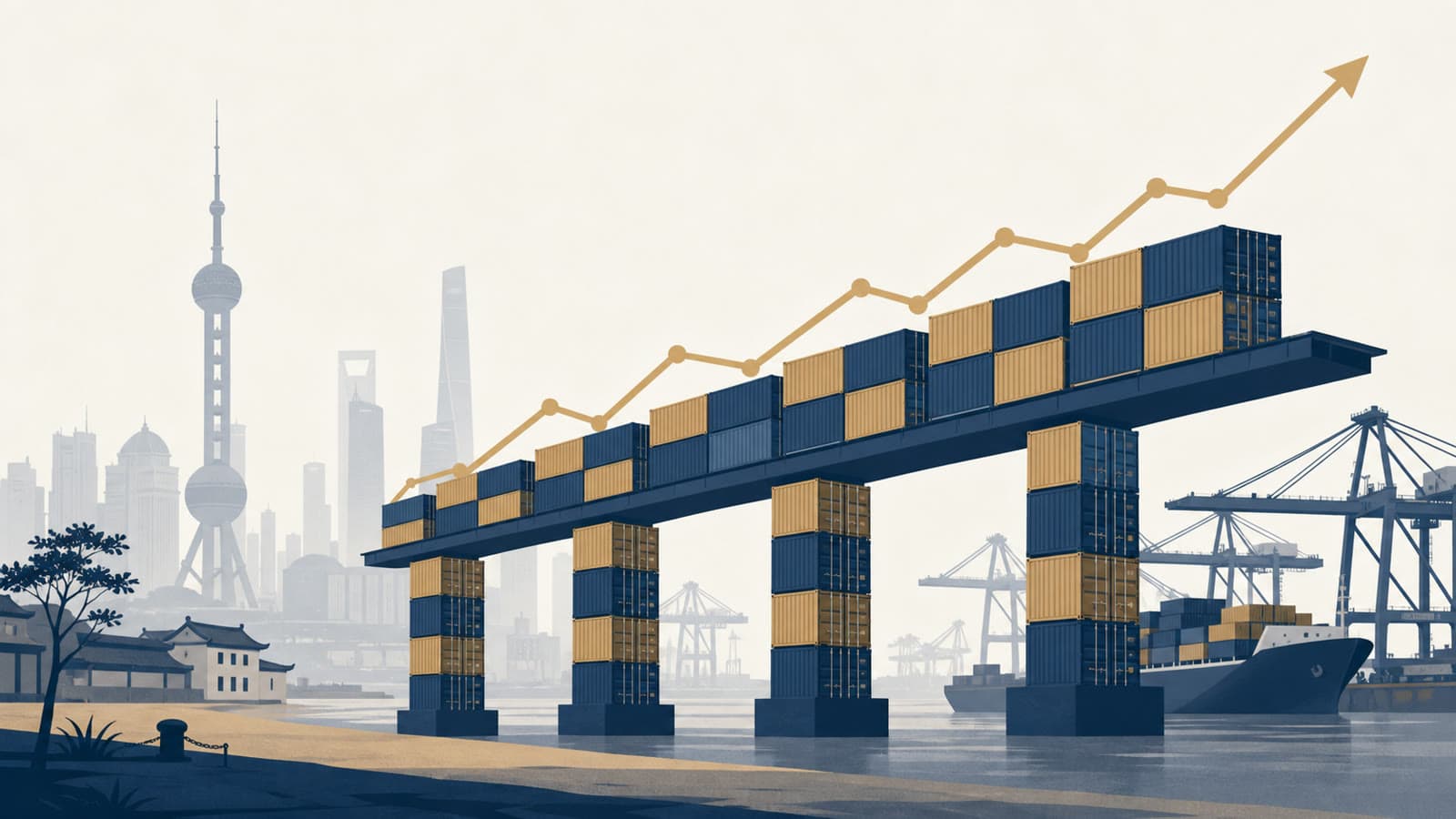
The National Bureau of Statistics published its May economic release on 16 June under a headline emphasising steady momentum. The component figures show a more uneven economy. The NBS said total retail sales of consumer goods fell 0.6% year on year in May, while industrial output rose 4.5% after a 4.1% increase in April.
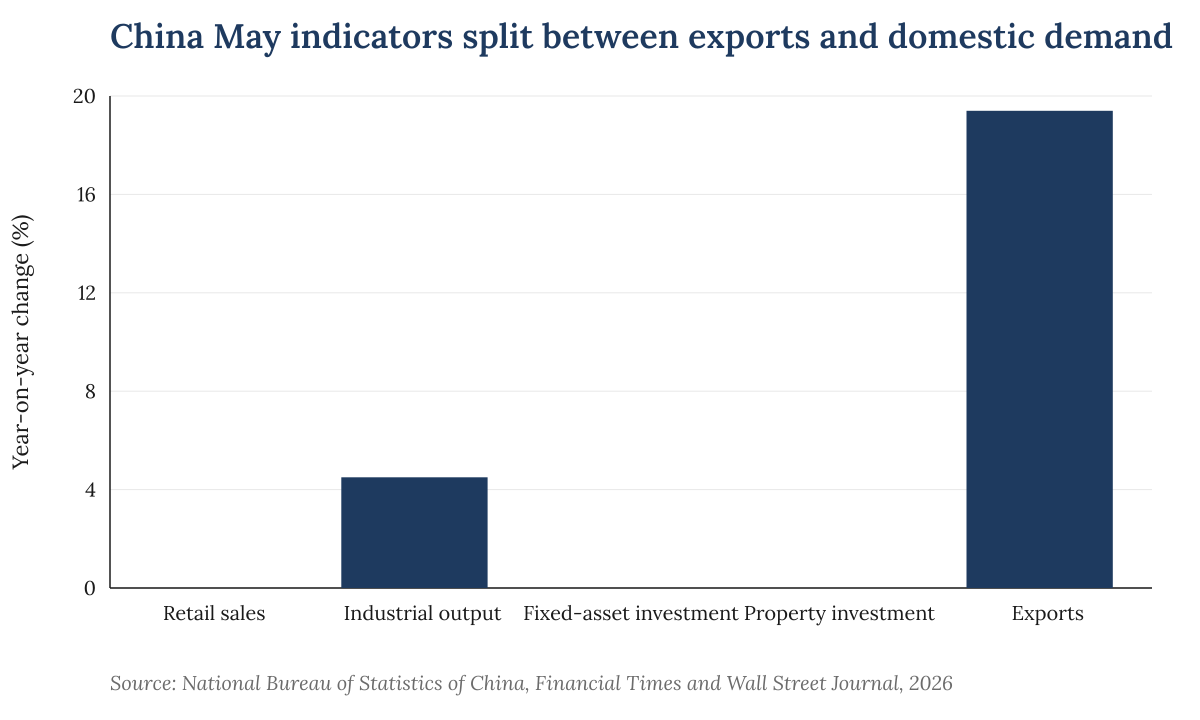 China May indicators split between exports and domestic demand. Source: National Bureau of Statistics of China, Financial Times and Wall Street Journal, 2026.
The split is the story. Industrial production growing at 4.5% would normally suggest decent momentum. Retail sales falling 0.6% says households are not matching that supply-side strength. The Wall Street Journal reported that the retail fall was the first such decline since strict Covid controls disrupted activity.
The NBS also said fixed-asset investment fell 4.1% year on year in January-May, a sharper decline than the first four months, and that real-estate development investment dropped 16.2%. The Financial Times reported that exports rose 19.4% in May. Taken together, the numbers show an economy leaning heavily on external demand while domestic balance sheets remain cautious.
Exports can support production, employment and factory utilisation, and that buys Beijing time. If global demand holds up, manufacturers can keep income flowing while targeted stimulus works through the economy. The official release itself pointed to foreign trade's resilience as one of the month's stronger features.
But that support does not solve the weaker part of the release. Exports cannot by themselves repair consumer confidence or the drag from real estate, and trade partners may resist a sustained flow of Chinese goods. An economy too dependent on external demand becomes vulnerable to tariffs, currency moves and slower global growth.