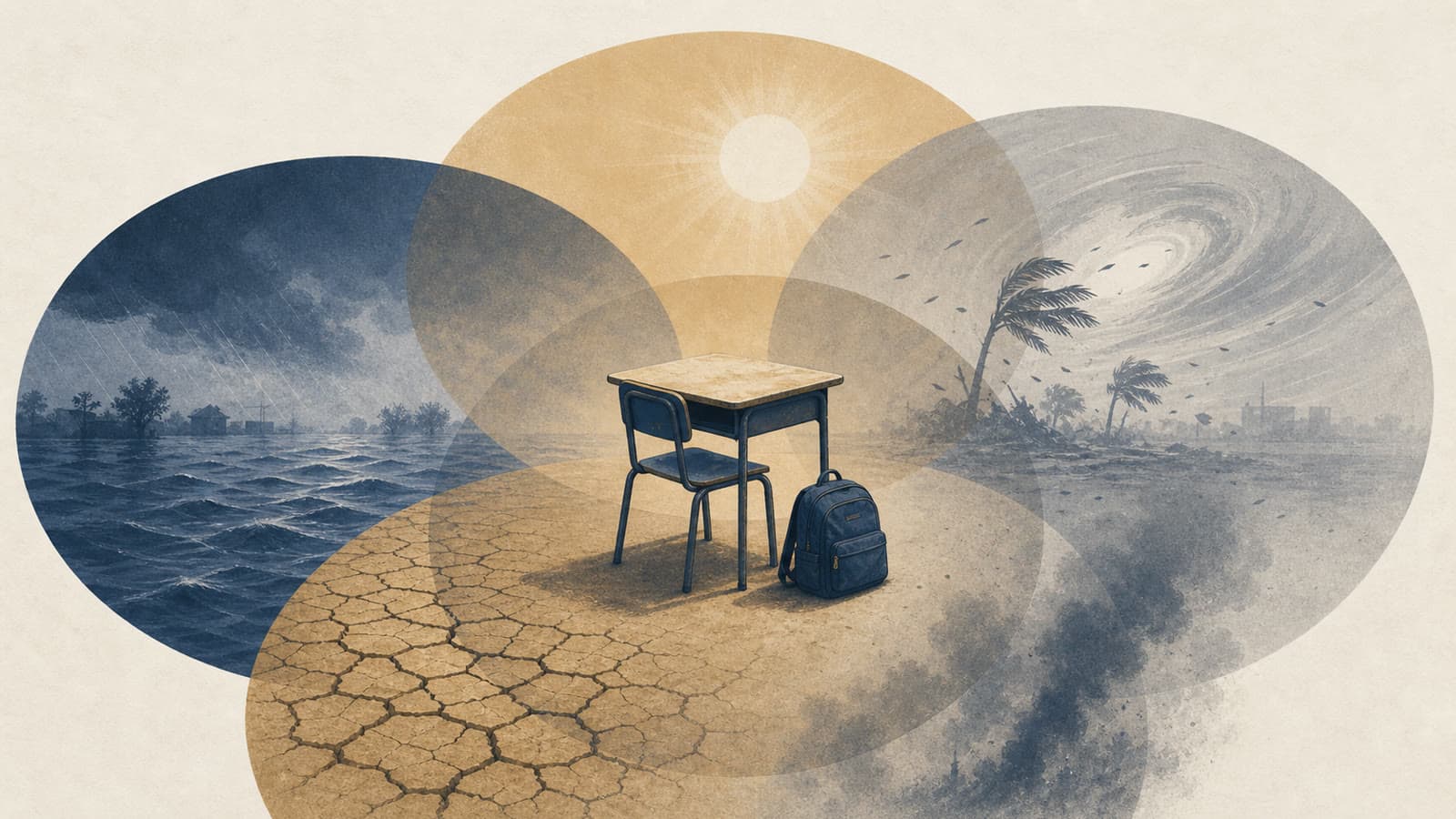
The 2026 Children's Climate Risk Report is built around cumulative exposure. UNICEF says almost all children are exposed to at least one of eight climate hazards: coastal floods, drought, extreme heat, fire, heatwaves, riverine floods, sand and dust storms, and tropical storms. Its data team describes the report as the most detailed global picture it has produced of where children face climate risk, combining hazard exposure with children's access to health, water, nutrition, education, protection and social protection services.
That second layer is crucial. A child facing heatwaves in a city with reliable cooling, clinics and school transport is not in the same position as a child facing heat, drought and flooding where roads, classrooms and health systems are already fragile. The report's value is not only the headline number. It is the map of where hazards stack on top of weak services.
UNICEF Data gives the scale of the separate hazards. It says 1.8 billion children are exposed to agricultural or meteorological droughts, 1.5 billion to heatwaves that are becoming more frequent, longer-lasting or more severe, and 1.2 billion to extreme heat conditions. It also counts 662 million children exposed to tropical storms, 337 million to riverine flooding, 206 million to frequent and severe fires, 123 million to sand and dust storms, and 33 million to coastal floods.
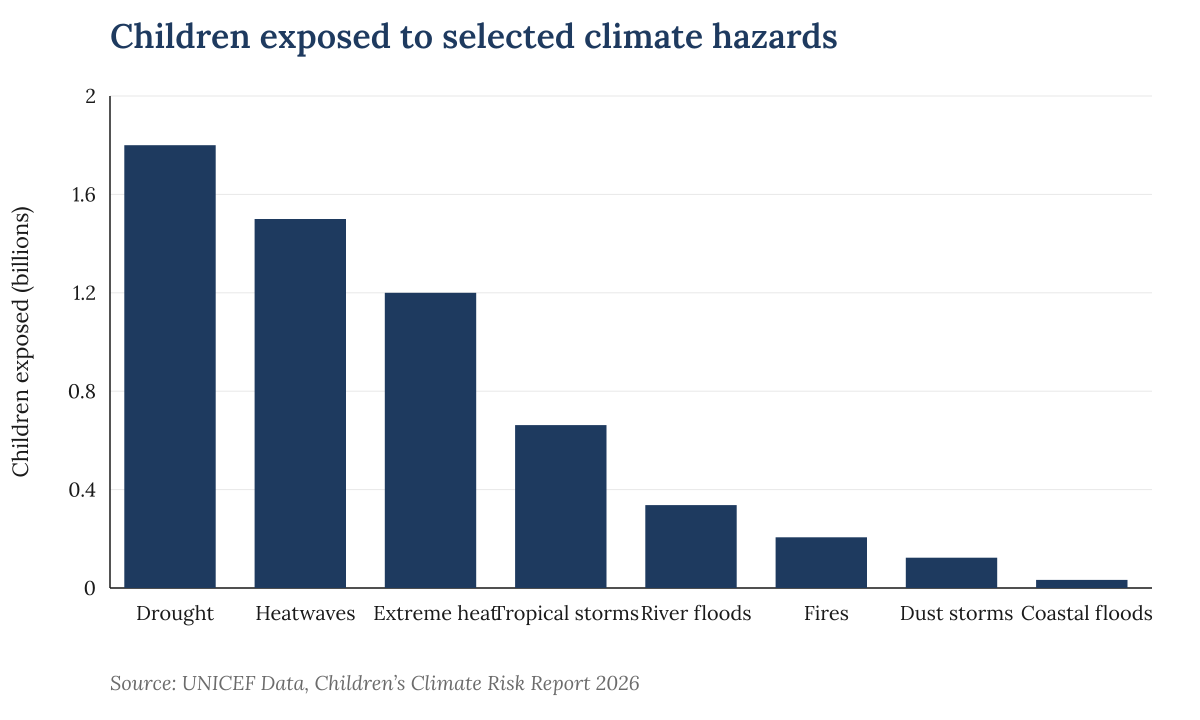 Children exposed to selected climate hazards. Source: UNICEF Data, Children's Climate Risk Report 2026.
The Guardian reported that UNICEF analysed exposure to the same eight climate hazards and warned that health and education infrastructure gaps leave children more exposed when those hazards overlap. It cited Papua New Guinea as an example of climate stress becoming an education problem, with children crossing a dangerous river to reach school after a bridge washed away and was not replaced.