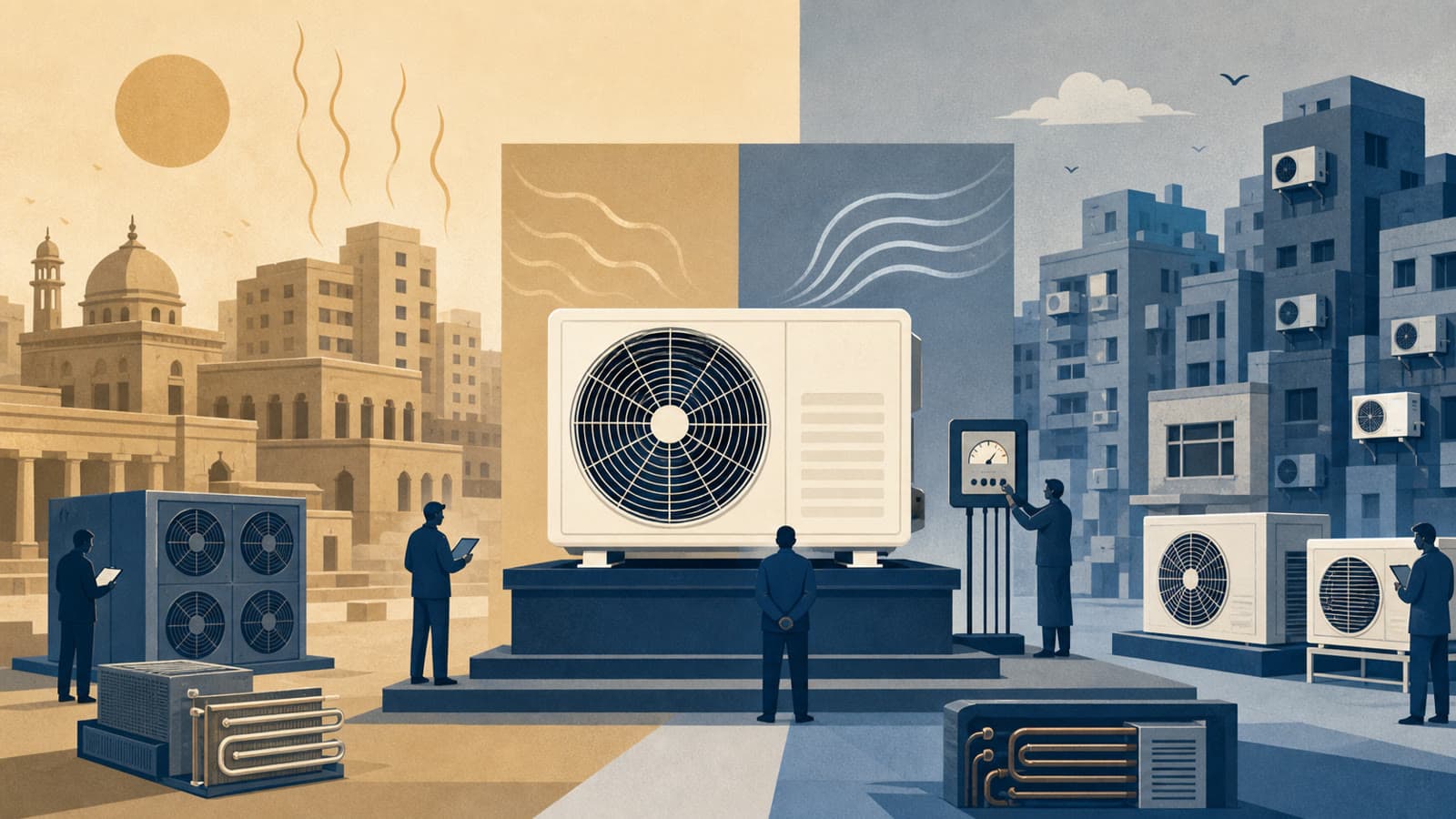
That finding turns a familiar climate-adaptation problem into a near-term consumer and grid issue. More cooling is becoming unavoidable as heat risk rises and incomes grow. The lock-in comes from the appliance itself: a cheap, inefficient unit bought in 2026 can shape household bills, peak power demand and electricity-related emissions for years.
Carbon Brief's analysis estimated that the same switch from two-star to five-star units would cut carbon dioxide emissions from electricity generation by nearly 5mn tonnes a year. It also reported that India's power demand reached a record 270GW on 21 May during a heatwave and a surge in air-conditioning use.
The government has seen the direction of travel for years. India's 2019 Cooling Action Plan projected that space-cooling demand would grow nearly 11-fold by 2037 under a business-as-usual scenario compared with 2017. The policy challenge is that cooling access and energy efficiency are not rival goals. The harder task is making the efficient option affordable at the moment a household makes its first purchase.
India's star-rating system gives consumers a simple signal. The Bureau of Energy Efficiency lists room air conditioners among the products covered by its standards and labelling programme, and the International Energy Agency says Indian AC efficiency levels are scaled from one to five, with five the most efficient. Carbon Brief's point is that the label only changes the grid trajectory if households can act on it.
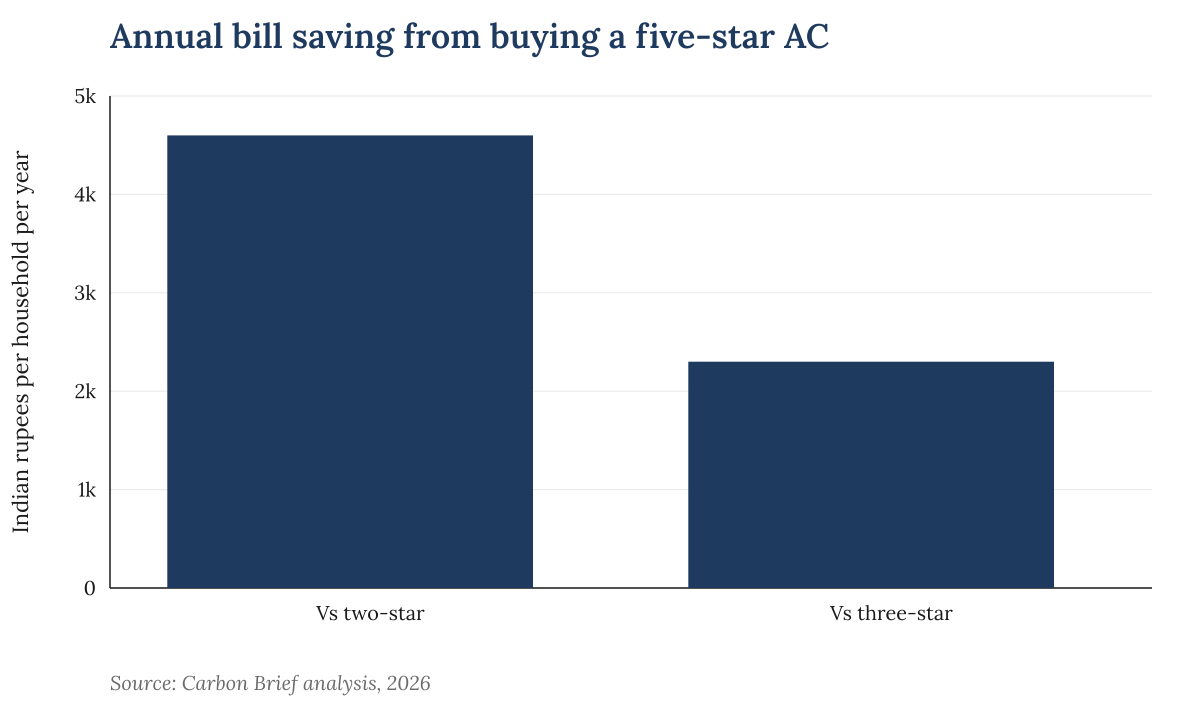 Annual bill saving from buying a five-star AC. Source: Carbon Brief analysis, 2026.
The household arithmetic is material. Carbon Brief estimated that a five-star air conditioner would save about INR4,600, or $48, a year on bills compared with a two-star unit, and about INR2,300, or $24, compared with a three-star unit. It also said a five-star unit costs on average INR5,000 to INR8,000 more upfront than a three-star model, creating a payback period of roughly three years.