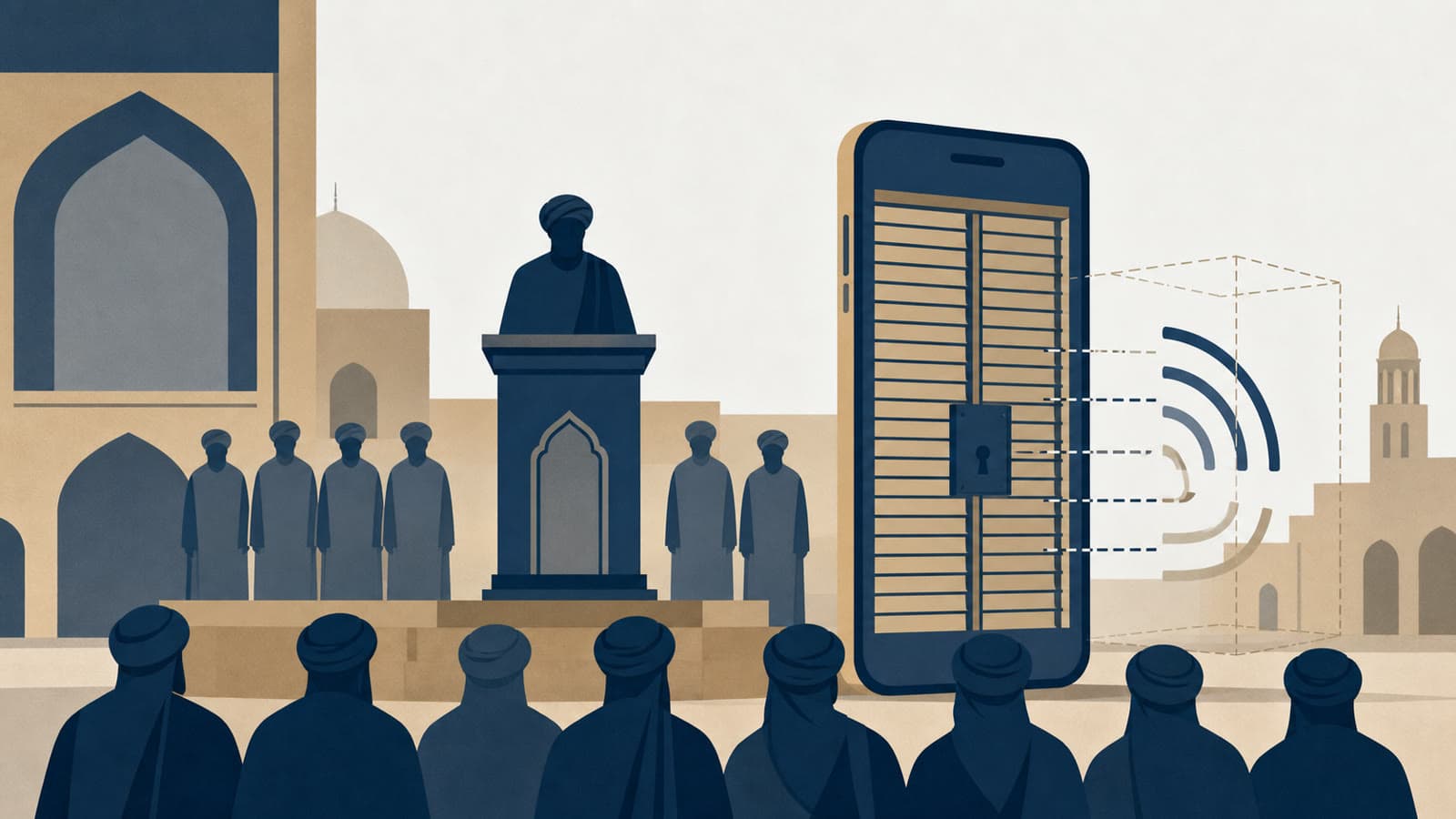
The Guardian reported on 18 June that a directive issued by the Taliban's military courts prohibits high-ranking and low-ranking personnel, fighters and service staff from using mobile phones. Afghanistan International reported earlier in June that a document it obtained described a verbal order from supreme leader Hibatullah Akhundzada banning smartphone use by Taliban members and government employees, with violators facing military-court proceedings.
The mechanism matters. Afghanistan International said the order was circulated by the Taliban Justice Ministry to heads of military courts across eight zones, with police commanders and intelligence chiefs also informed. That makes the measure more than an office memo: it routes enforcement through courts, police and intelligence structures.
The Guardian reported that the order warns phones will be smashed and legal or sharia punishment imposed unless Akhundzada grants a written exemption. It said the Guardian could not reach a Taliban spokesperson. Afghanistan International reported that officials were told to ensure enforcement and to keep a monitoring list with names, positions, places of service, mobile networks and phone numbers.
The central order appears aimed at officials and Taliban personnel. The wider concern is implementation. The Guardian reported that bans were being applied unevenly, with some areas targeting government officials and others extending restrictions to women, civilians, medical workers, schoolteachers and students. KabulNow reported on 16 June that restrictions had expanded in parts of Panjshir and Ghor to schools, government offices and health facilities.
That is where the politics of the order changes. A rule framed as discipline inside the Taliban administration can affect public institutions if teachers, health workers and students are pulled into it. Smartphones are not only entertainment devices; in Afghanistan they are tools for communication, documentation, access to services and contact with the outside world.