
The paper, by Peter Sasieni and Matejka Falcaro, analysed population-based cervical-cancer mortality data in England from 2001 to 2024. The European Medical Journal reported that the study estimated about 199.6 cervical-cancer deaths had been prevented by the end of 2024, with a 95% confidence interval from 125.0 to 274.2. The Guardian, citing the Queen Mary team, put the public-health result more plainly: nearly 200 young women in England are estimated not to have died from cervical cancer because of HPV vaccination.
The sharpest result sits in the youngest adult cohort. EMJ reported that among women aged 20 to 24 between 2020 and 2024, who were offered vaccination at ages 12 to 13 under England's 2008 programme, no cervical-cancer deaths occurred where the model would have expected about 23 without vaccination. The same account said estimated relative mortality reductions were 100% for women aged 20 to 24, 100% for those aged 25 to 29, and 63% for those aged 30 to 34.
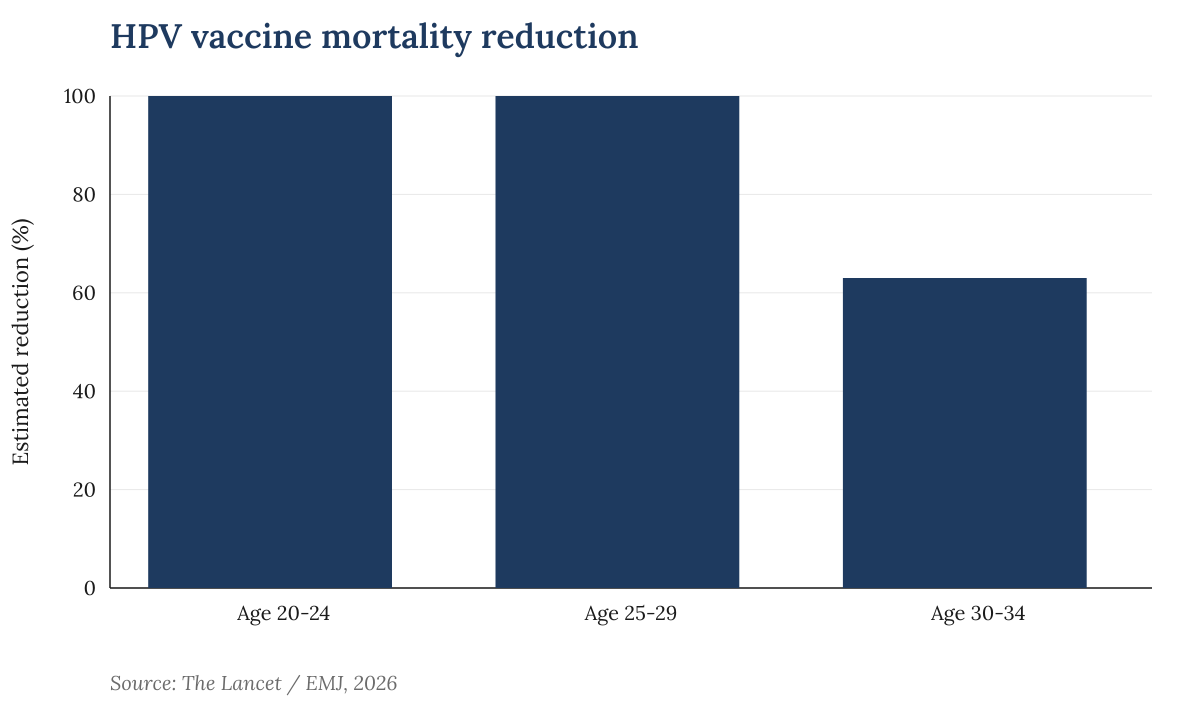 HPV vaccine mortality reduction. Source: The Lancet / EMJ, 2026.
That pattern matters because incidence studies had already shown large falls in cervical cancer after HPV vaccination. Mortality is a slower test. Cervical cancer usually develops years after persistent infection with high-risk human papillomavirus, and the first routinely vaccinated school cohorts have only recently reached ages at which enough outcomes can be measured. A fall in deaths, not only diagnoses, is therefore a stronger signal that early adolescent vaccination is changing the disease's trajectory.