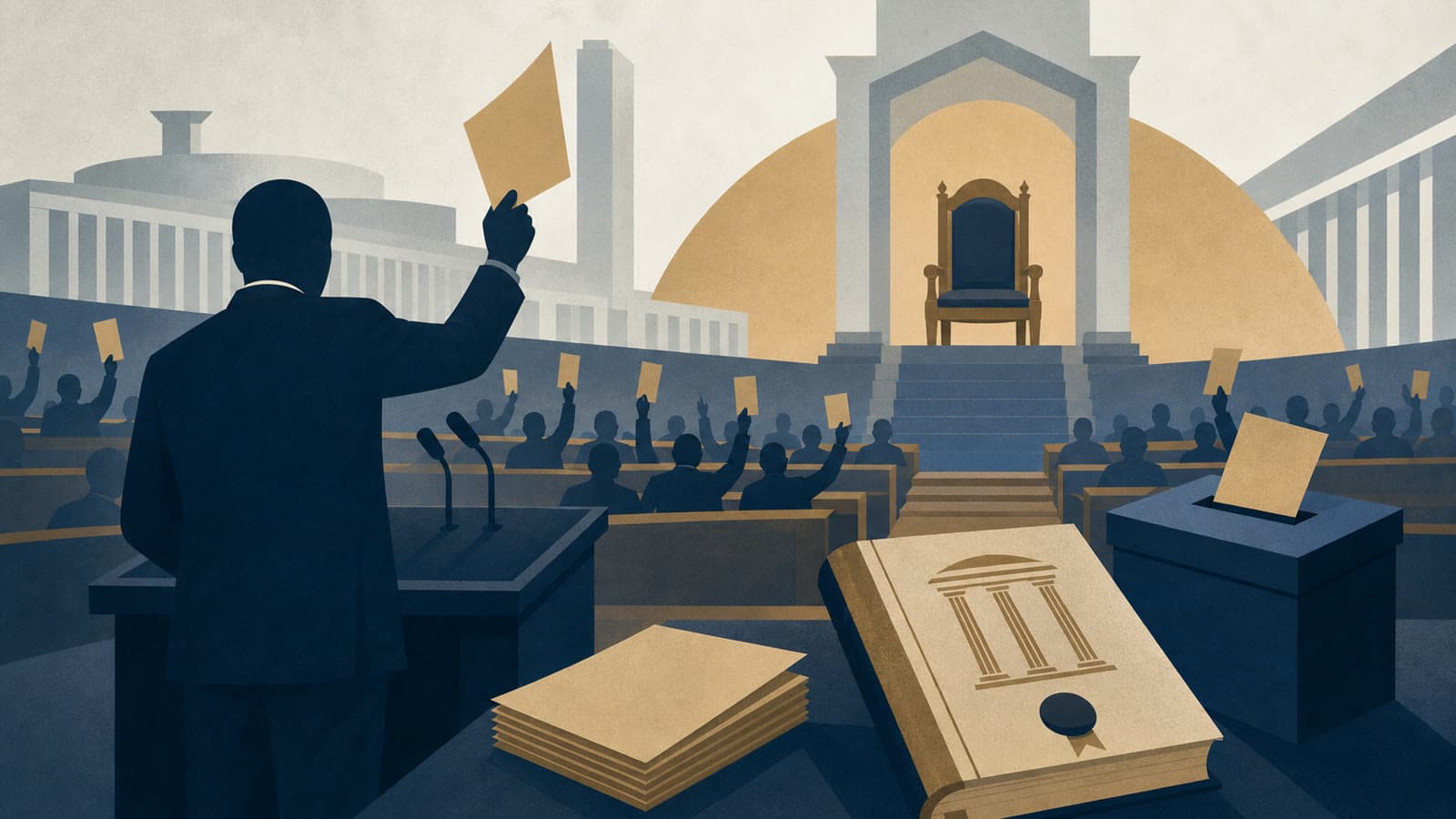
The Parliament of Zimbabwe's 18 June National Assembly Hansard records that the Constitution of Zimbabwe Amendment (No. 3) Bill, H.B. 1, 2026, was adopted as amended, put to a recorded third-reading vote and declared passed after clearing the two-thirds threshold. Speaker Jacob Mudenda said 216 members voted for the bill and 42 against it, above the 187 affirmative votes required out of the 280-member House.
That primary record resolves the procedural question left open by earlier reporting: the lower house has passed the bill, and the next institutional test is the Senate. Parliament's own homepage on 20 June listed the 18 June National Assembly Hansard summary under consideration of the Constitution of Zimbabwe Amendment (No. 3) Bill, while the same sitting adjourned the House until 7 July.
Al Jazeera, carrying AP and Reuters reporting, said the amendments would postpone elections due in 2028 to 2030, extend President Emmerson Mnangagwa's current term from five to seven years and shift presidential elections from a direct popular vote to selection by lawmakers. AP reported when the bill was introduced that it would also lengthen the terms of MPs, councillors and mayors from five to seven years.
The formal vote count is stark, but the constitutional change is broader than a two-year extension. If the Senate approves the bill, Zimbabwe would move the presidency away from a nationwide ballot and toward a parliamentary mechanism. That makes legislative dominance, party discipline and the composition of both houses central to executive power.
Supporters present that as institutional tidying. Al Jazeera reported Justice Minister Ziyambi Ziyambi telling lawmakers on 3 June that the bill was a continuation, not an abandonment, of Zimbabwe's constitutional order, and that it was intended to refine provisions after more than a decade of experience. The minister has rejected claims that the bill grants a third term or removes voting rights.
The argument has force only if the reader accepts the government's distinction between term limits and the election cycle. The amendment can leave the two-term rule on paper while changing the length of each term, the timing of the next election and the method for choosing the head of state. That is why the fight is over constitutional design, not only succession.