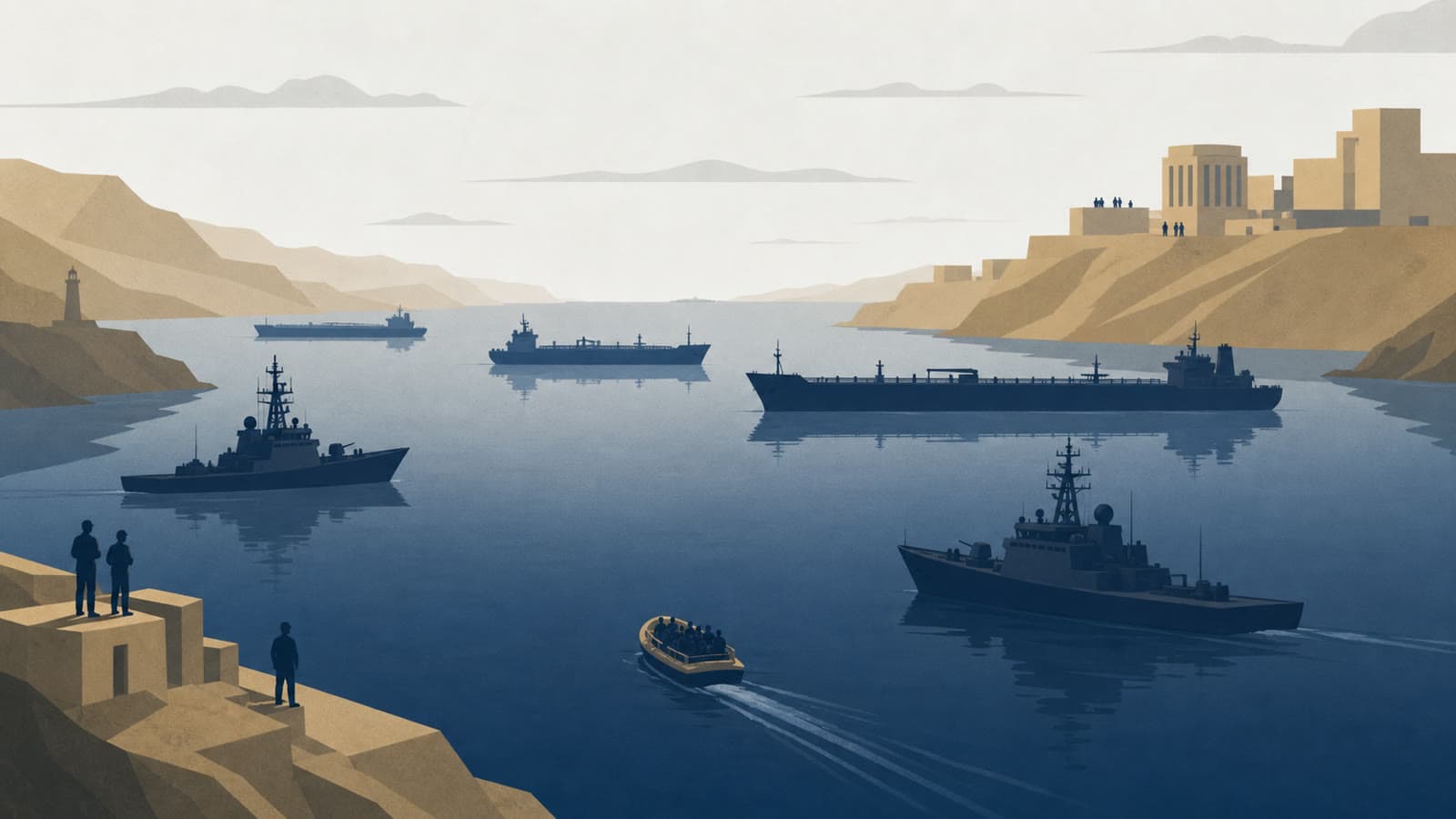
The International Maritime Organization said around 11,000 seafarers were expected to be evacuated from the Strait of Hormuz region after a memorandum of understanding between Iran and the United States. Arsenio Dominguez, the IMO secretary-general, said the operation would be carried out with Iran, Oman, other coastal states, the United States and the maritime industry. He also said 14 seafarers had died during the conflict.
That makes the evacuation a humanitarian operation inside a strategic chokepoint. The strait is not simply a line on an energy map; it is a crowded waterway in which coastal-state authority, international navigation rights, naval deconfliction and commercial risk assessments have to work at the same time. A ceasefire may create the political condition for movement. It does not by itself make the traffic separation scheme safe.
The notice to mariners released through the IMO shows how narrow the operational problem is. Oman said it was acting in coordination with the IMO to provide vessels with the option of a temporary maritime corridor and warned that the existing traffic separation scheme was not safe for use at that time. The notice described two temporary routes for vessels departing through the strait and said designated ships would be contacted individually with departure instructions.
It also kept responsibility partly on shipowners and masters. Each vessel, the Omani notice said, remained responsible for an independent risk assessment before voyage. Ships were told to keep AIS switched on, use long-range identification and tracking where applicable, and comply with instructions from coastal states by VHF. The IMO said it would report daily on the number of vessels safely departing the region.
The toll dispute sits behind that safety work, but it should not be confused with it. The Guardian reported that US secretary of state Marco Rubio told Gulf allies that passage through the Strait of Hormuz should remain toll-free, while Iran and Oman were discussing how transit costs might be handled after the US-Iran deal. Al Jazeera, reporting from the region, said Iranian negotiator Mohammad Bagher Ghalibaf had described a proposed "payment for services" for vessels crossing the strait, a position the United States had rejected.