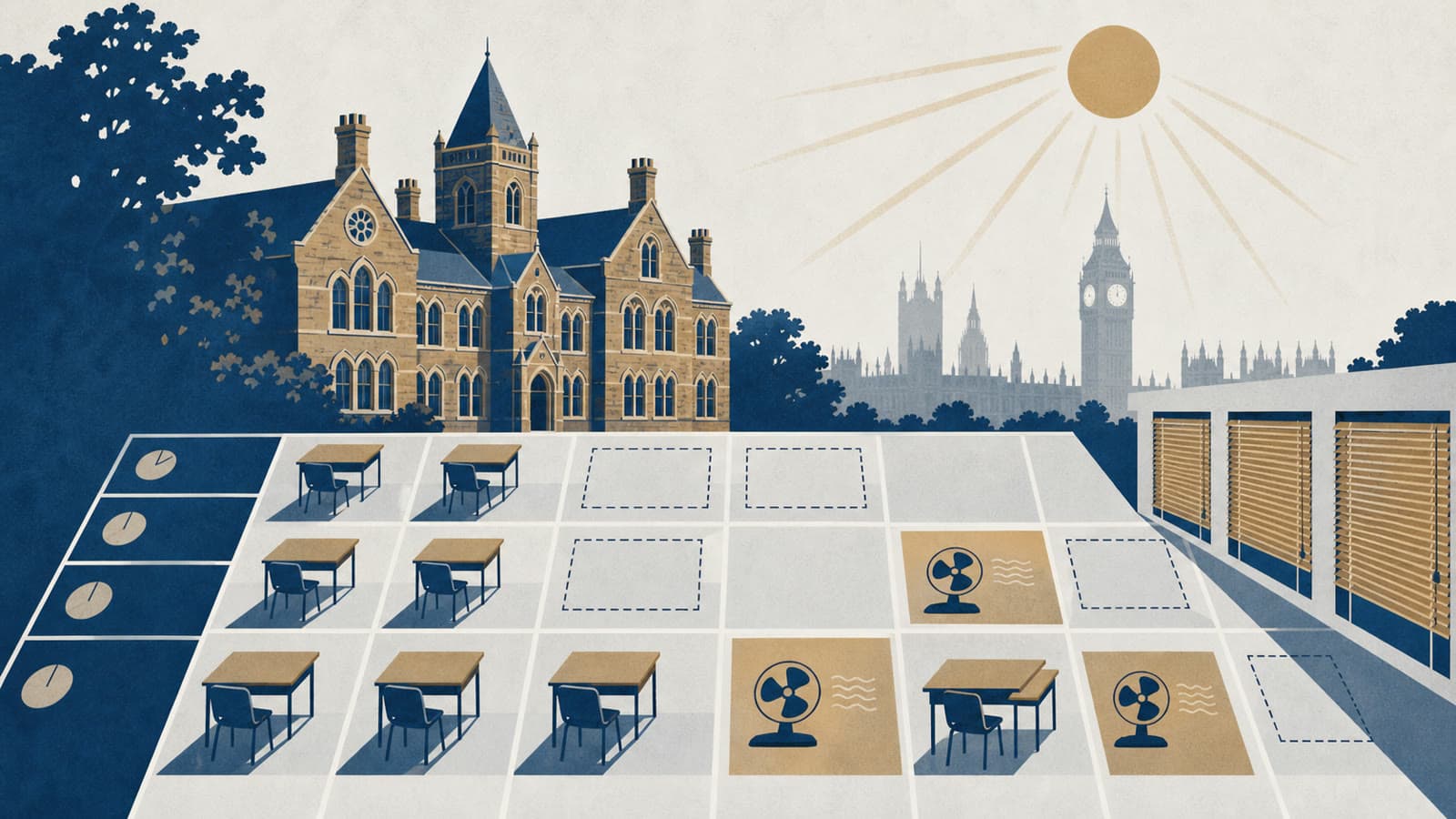
That turns a climate adaptation failure into an education policy question. Attendance is the Department for Education's default answer, and the department told the Guardian that schools in England should "normally" stay open in hot weather because attendance is the best way for pupils to learn. Yet the same report described schools shifting classes, relaxing uniform rules, warning of transport disruption and buying portable fans where they could still find them.
The immediate closures were local decisions, not a national shutdown. Several London boroughs were among those affected, the Guardian reported, while schools in Berkshire, Wiltshire and Bristol told parents about partial or full closures. In Wales, the government wrote to council education directors about safety advice for children and staff, particularly younger pupils and those with disabilities, complex health needs or medication that may increase risk.
The deeper story is the estate. A follow-up Guardian analysis on 24 June described schools in which older brick buildings were coping better than newer blocks with large glazed areas, enclosed walkways or poor ventilation. Dave Woods, headteacher of Beaconsfield primary school in west London and president of the National Association of Head Teachers, told the paper that his Victorian-Edwardian building was more tolerable than a 2017 building on the same site, even before the peak heat arrived.
The Climate Change Committee, the statutory adviser to government, has been making the wider point for years. Its independent assessment of UK climate risk said the gap between climate risk and adaptation had widened, and that adaptation had failed to keep pace with the worsening reality of climate risk. Schools are one of the places where that gap becomes visible quickly: children are present in large numbers, older buildings are expensive to retrofit, and timetable disruption lands immediately on families.
UK Health Security Agency guidance says children can be vulnerable to heat because of their physiology, behaviour and activity levels, with greater risks for very young children and those with some health conditions. The agency's hot-weather advice, updated in May 2026, sets out practical measures for keeping indoor spaces cooler and reducing heat-related illness. Separate guidance for teachers and educational professionals tells schools and early years settings to reduce exposure to heat, identify children at higher risk and adapt activities where needed.