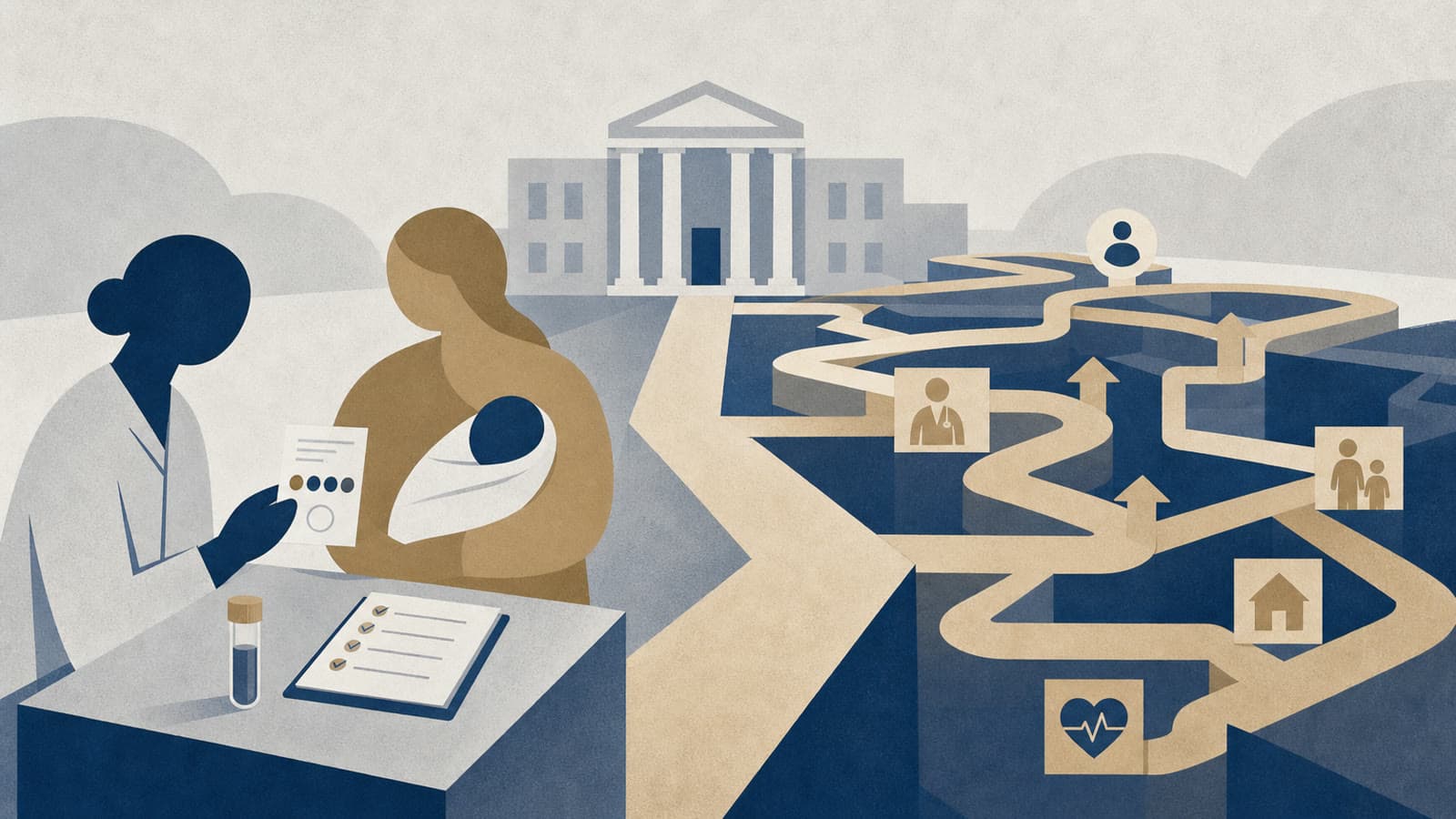
WHO said on 23 June that countries should expand newborn screening for birth defects, arguing that early detection and treatment can save lives and reduce lifelong disability. Its new technical report focuses on low- and middle-income countries, where screening, diagnosis, management and long-term care often have to be built into routine services rather than added as specialist projects.
The scale explains the urgency. WHO said an estimated 8 million babies are born with a birth defect each year and that birth defects now account for almost 8% of all deaths among children under five. Its congenital-disorders fact sheet gives another measure of the burden: an estimated 240,000 newborns die within 28 days of birth each year because of congenital disorders, with a further 170,000 deaths among children aged from one month to five years.
As infectious and other preventable causes of child death decline, birth defects become more visible in the mortality statistics. WHO said the share of under-five deaths attributed to birth defects rose from 1% to 4% in sub-Saharan Africa between 2000 and 2023, and from 3% to 11% in South Asia over the same period. That is progress and warning at the same time: fewer children are dying from some causes, but health systems then have to handle conditions that require earlier detection and longer care.
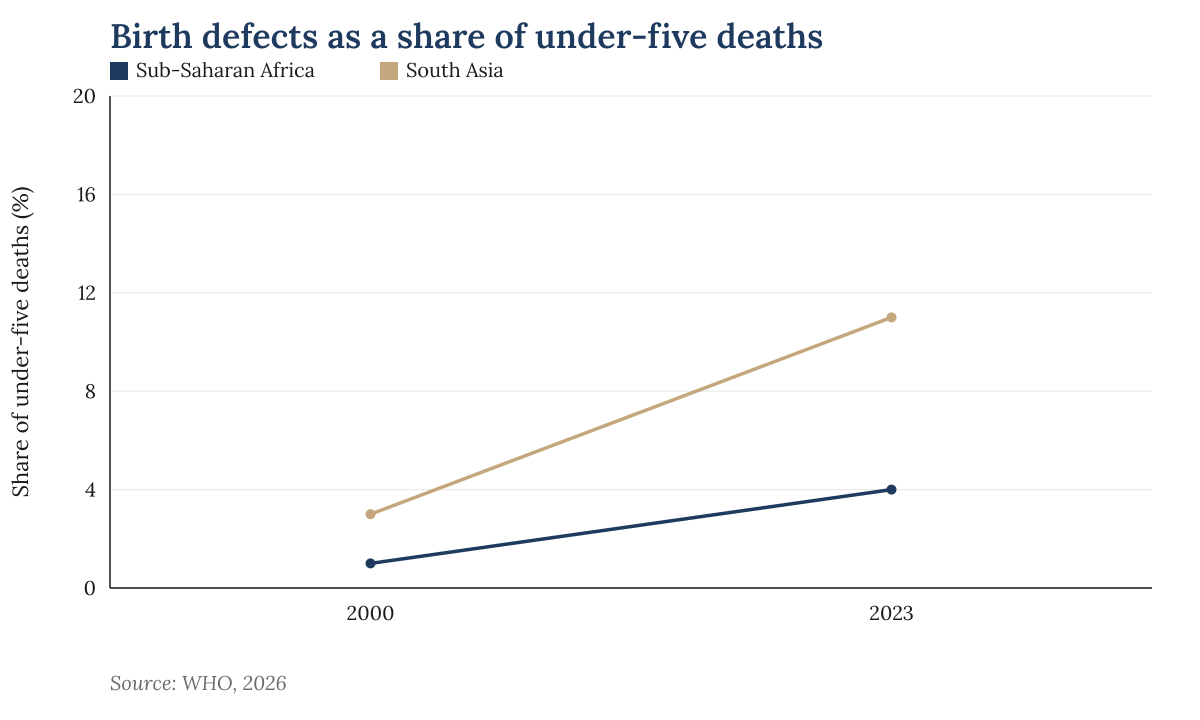 Birth defects as a share of under-five deaths. Source: WHO, 2026.
WHO's report recommends a deliberately modest starting point. It urges governments to integrate newborn screening, diagnosis and treatment into routine health services and universal health coverage, beginning with one or a few priority conditions that can be detected and feasibly managed in that country's health system. The examples WHO named include congenital hypothyroidism, sickle-cell disease, hearing impairment and some metabolic disorders.
That caveat matters. Screening is useful only if a positive result leads somewhere. WHO's technical report says programmes need referral pathways, follow-up and rehabilitation services, data systems and sustainable financing. Health Policy Watch reported from the WHO launch that Dr Ayesha De Costa, a WHO scientist, described newborn screening as a strong investment when it is linked to diagnosis, treatment, referral systems and long-term care.