
That combination is the point of the release. A one-month rebound can be real and still leave the underlying signal weak. Michigan's current economic conditions index rose to 47.7 from 45.8, while the expectations index rose more sharply, to 50.7 from 44.1. Both remained below their levels a year earlier.
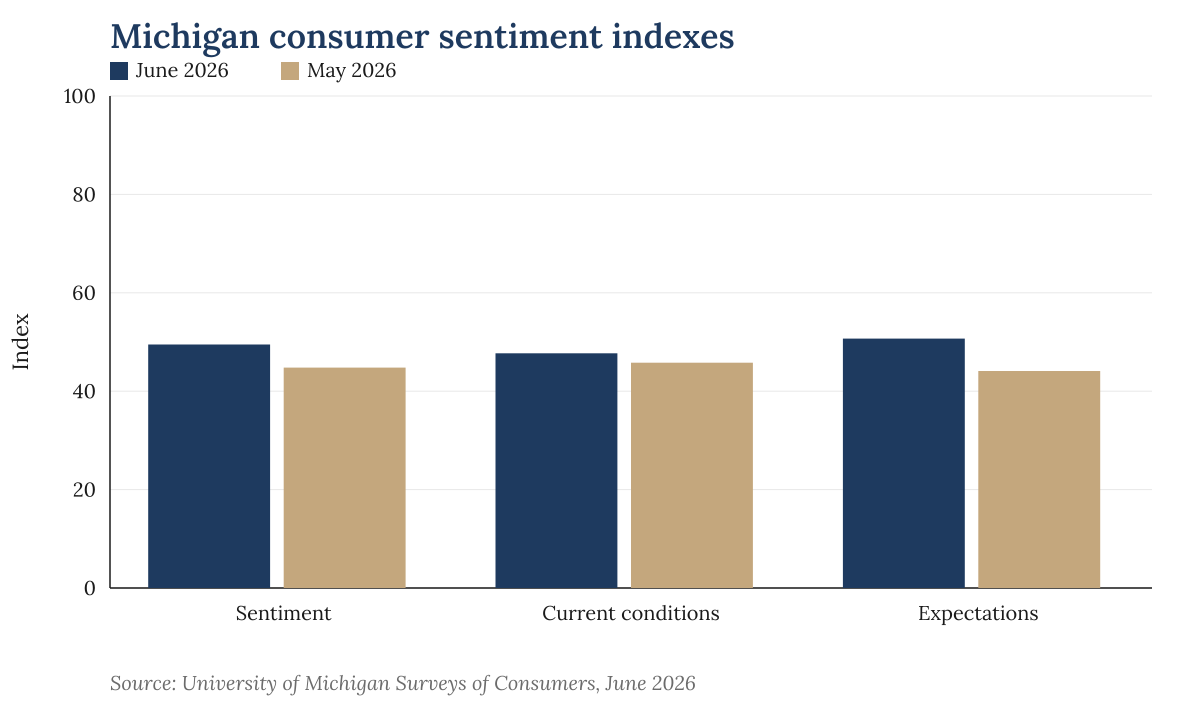 Michigan consumer sentiment indexes. Source: University of Michigan Surveys of Consumers, June 2026.
Joanne Hsu, director of the Surveys of Consumers, said the June gain confirmed the early-month reading and was helped by moderated gasoline prices. She also said sentiment remained in unfavourable territory, 13% below the February 2026 reading before the start of the Iran conflict and nearly 20% below a year earlier.
The survey therefore gives the Federal Reserve and other forecasters a mixed household-demand signal. Consumers were less alarmed than in May, and the improvement appeared across income, wealth and political affiliation groups. But the same release said the cost of living remained at the forefront of households' minds, with more than half of consumers spontaneously mentioning high prices for a third consecutive month.
Inflation expectations underline the tension. Michigan said year-ahead inflation expectations edged down to 4.6% in June from 4.8% in May, while long-run expectations fell to 3.3% from 3.9%. Those declines reduce one source of pressure, but the year-ahead figure remained well above February's 3.4% reading and above all 2024 readings in the survey.
That matters because sentiment is not a direct measure of spending. It is a reading on how households assess their finances and the economy. A cheaper trip to the petrol station can lift mood quickly; persistent concern about food, rent, insurance and borrowing costs can keep the broader index depressed.