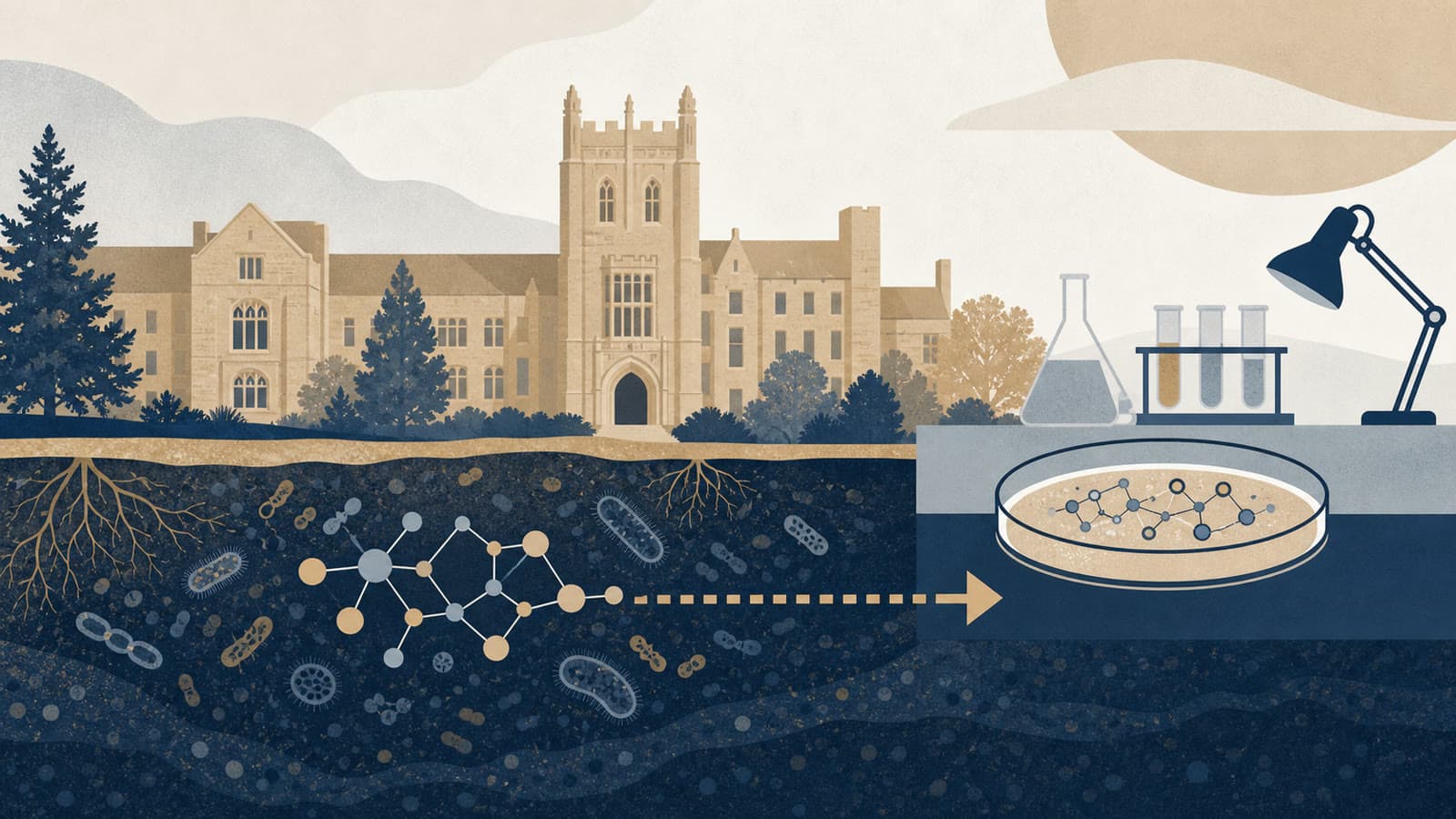
That multi-pronged design is why the paper has drawn attention. Antibiotic discovery often fails because a compound that looks potent in a dish cannot be made safe, stable or effective in the body. A cluster that yields several related attacks on bacterial metabolism gives chemists more than one starting point.
McMaster University, where Eric Brown's group led the work, said the study identified a bacterial gene "megacluster" behind an arsenal of potent antibiotics. Ars Technica framed the result more cautiously: a possible strategy against drug-resistant infections, not a clinical therapy.
The caution is essential. The Nature paper is preclinical biology. It reports the organism, the gene cluster and the compounds' mechanism; it does not show that a drug is ready for animal use, let alone human testing. The work helps explain how nature builds antibacterial pressure, but clinical development would still have to answer toxicity, dosing, resistance and manufacturing questions.
The public-health context is still serious. The World Health Organization describes antimicrobial resistance as a global health and development threat, because infections that once responded to standard drugs are becoming harder and costlier to treat. New mechanisms matter because the existing antibiotic pipeline is thin relative to the scale of resistance.
The finding also illustrates why old habitats remain scientifically valuable. Streptomyces bacteria have long been a source of antibiotics, but modern genomic tools allow researchers to inspect gene clusters that earlier screening methods could miss. The paper's contribution is to connect a large genetic region with a set of compounds that appear to work in concert.