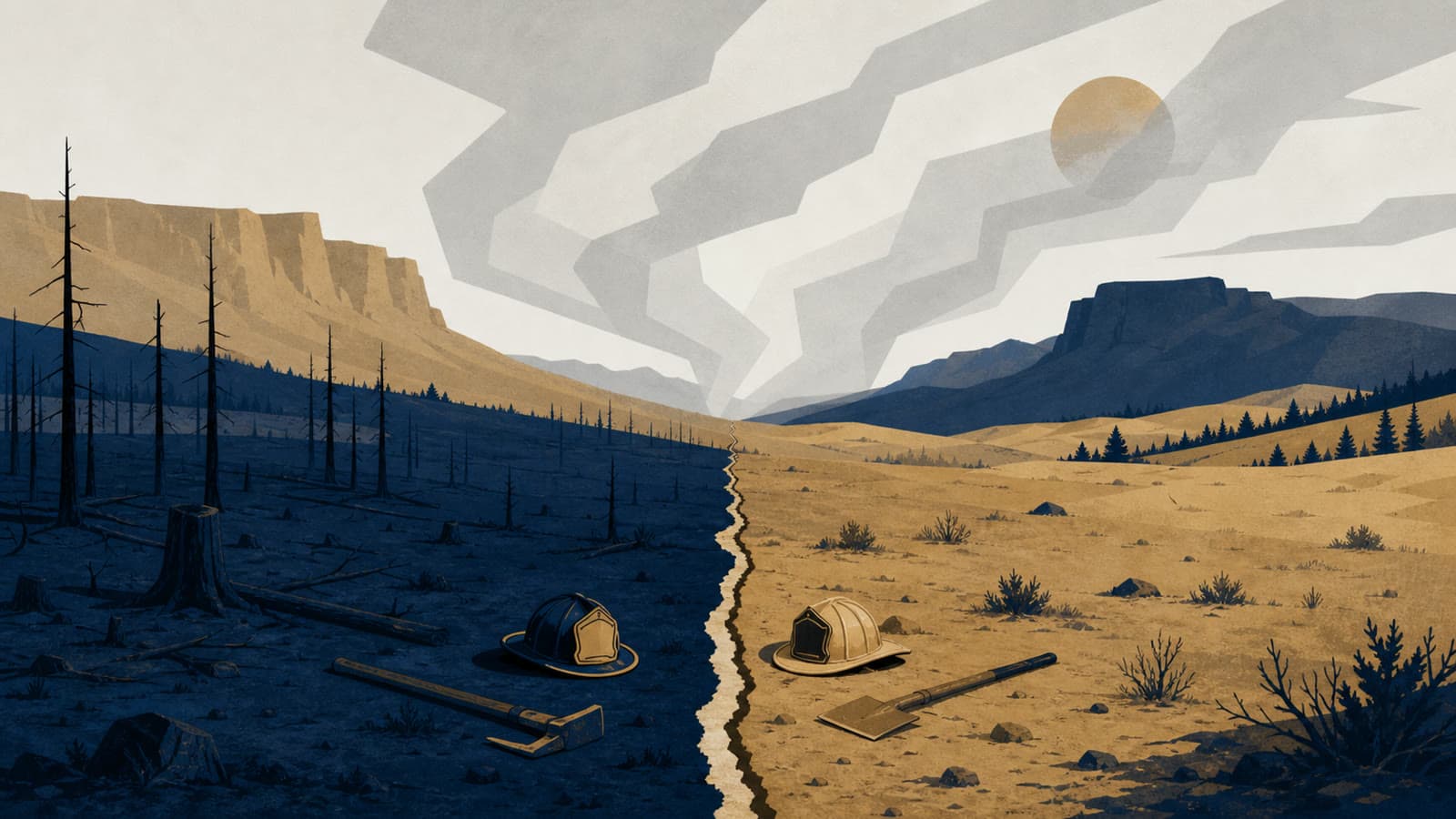
The official picture is still developing, and that matters. Fire agencies usually release fatalities, incident names, acreage, containment and cause information on different timelines. Early casualty and acreage figures can change as incident records firm up over the following days, especially when fires are moving across difficult terrain and multiple agencies are involved.
The broader operating environment was already strained. Utah Governor Spencer Cox's office said on 26 June that more than 75% of the state's wildfires this season had been human-caused and announced temporary statewide fireworks restrictions amid prolonged drought, critically dry vegetation and extreme weather. That statement does not prove the cause of the fires in which the firefighters died. It does show the conditions officials believed were raising risk across the state.
That distinction is important for climate coverage. A specific fatal incident should not be attributed to climate change without a sourced attribution study or fire-weather analysis. The defensible point is narrower: dry fuels, drought and extreme weather can make fire behaviour harder to manage, and officials in Utah had already cited those conditions when restricting ignition risks.
Firefighter fatalities also reveal a part of wildfire seasons that acreage totals can hide. A large incident may be dangerous because of terrain, wind shifts, access, communications or evacuation pressure, not only because it is the largest fire on the map. When several large incidents burn at the same time, agencies must move people, aircraft and equipment across a wider field of risk.
That is why responder-risk stories should not be reduced to a single fire perimeter. A small, fast-moving incident near homes can absorb more attention than a larger fire in remote country. Night operations, aviation limits, road access and radio coverage can all shape the risk crews face before the public sees a clean containment percentage.