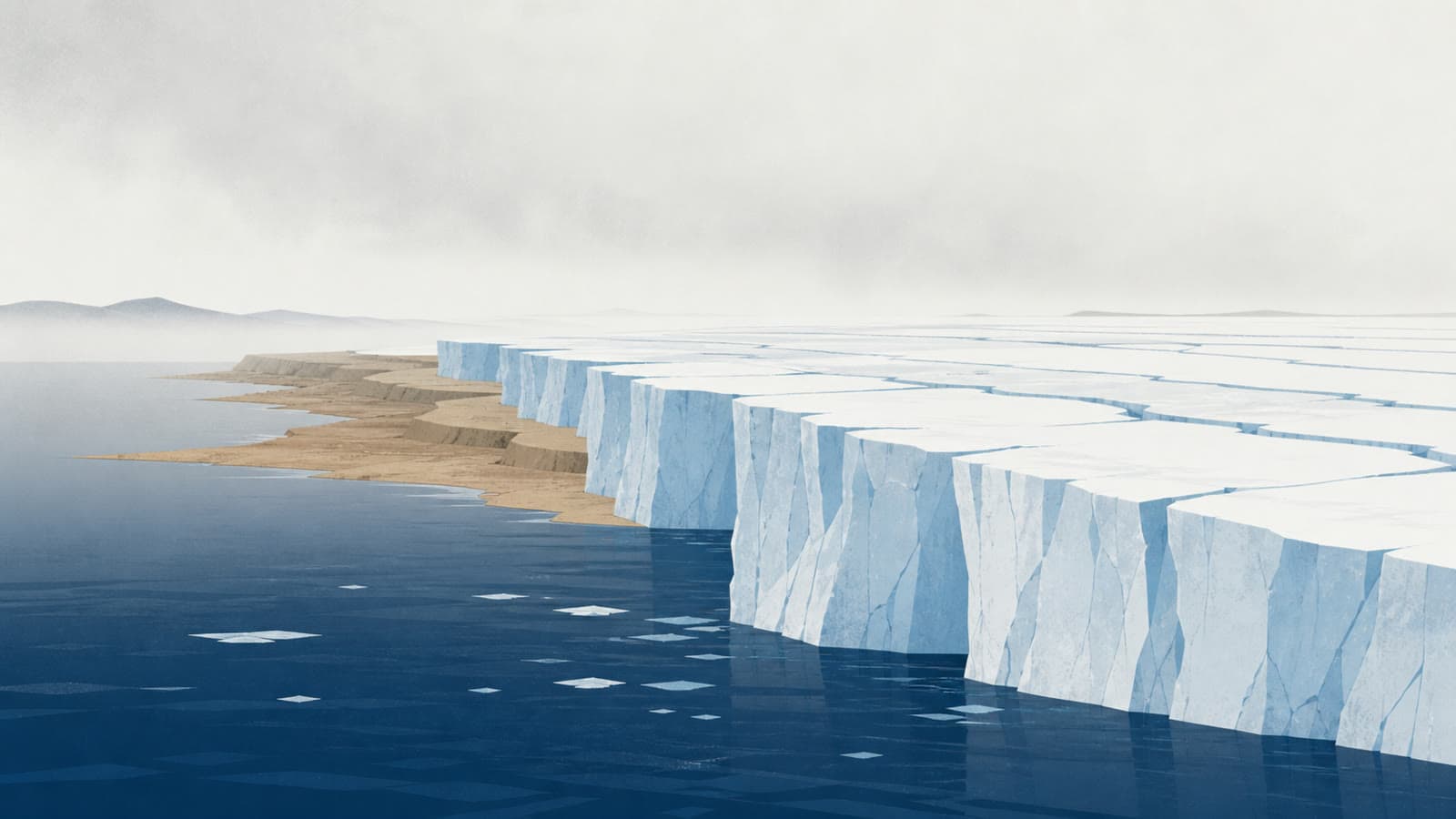
The study, published in The Cryosphere and explained in a Carbon Brief guest post by Alex Bradley of King's College London, frames Pine Island as a case where climate change is material but not solitary. Most of the retreat in the modelled period is instead linked to internal climate variability and ice-ocean dynamics, including an unusually warm ocean episode in the 1940s.
That matters because Pine Island is not an obscure ice stream. NASA's Scientific Visualization Studio describes the glacier as part of the Amundsen Sea system where warmer ocean currents erode floating ice from below, while the AntarcticGlaciers.org project notes that Pine Island drains a large part of the West Antarctic Ice Sheet. The new paper's narrower contribution is attribution: it asks how much of the industrial-era retreat can be assigned to anthropogenic climate change.
Bradley and his co-authors used atmosphere, ocean and ice-sheet simulations to compare model worlds with and without human-driven warming. Their result is not a verdict that climate change "caused Pine Island Glacier to retreat" in the everyday sense. It is a quantified estimate that the human signal explains about a fifth of the retreat, leaving a larger share to natural variability and the glacier's own interaction with the ocean.
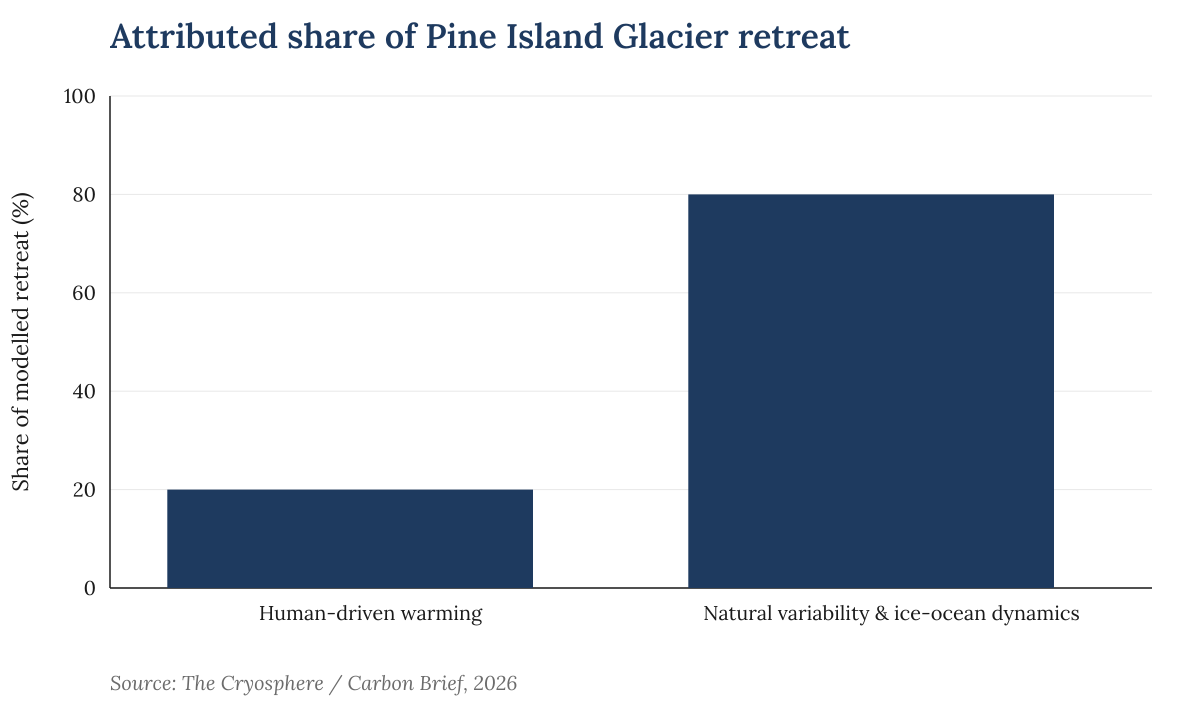 Attributed share of Pine Island Glacier retreat. Source: The Cryosphere / Carbon Brief, 2026.
The restraint is the point. Carbon Brief's summary says the study finds climate change responsible for around 4km of retreat, about a fifth of the total. The same account says a period of natural variability in the 1940s set off a much larger movement of the grounding line, the place where the ice sheet lifts from bedrock and begins to float. Once that line retreats into deeper bedrock, the system can keep moving even without a simple one-to-one temperature trigger.