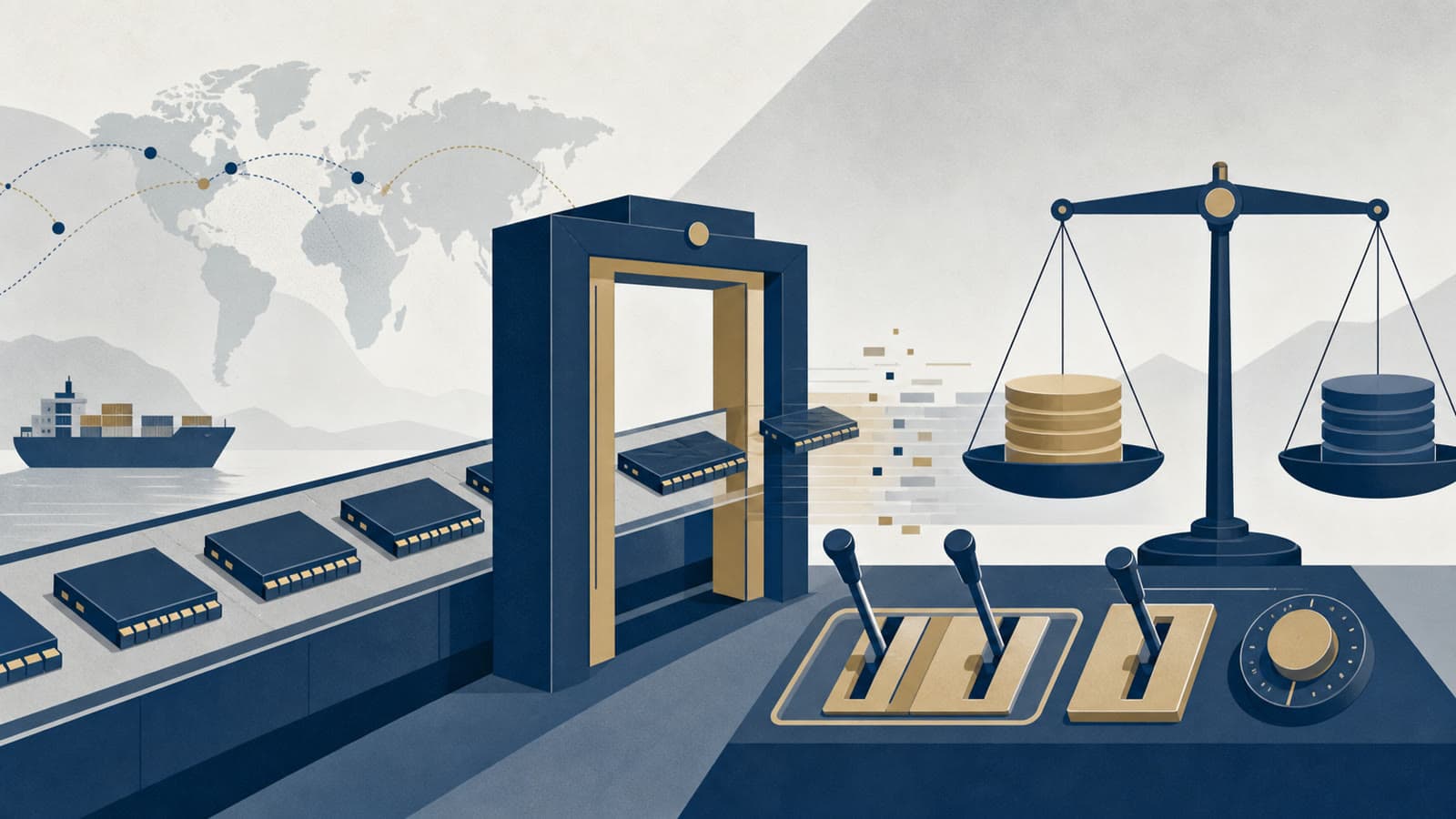
The Financial Times reported that Apple has lobbied the Trump administration for clearance to buy memory chips from CXMT, China's largest DRAM maker. A Reuters wire item, carried by WKZO, repeated the FT account and said Apple was seeking clearance from the administration rather than announcing a completed purchase.
The distinction matters because the legal status is narrower than the word "blacklisted" suggests. The Pentagon's June Section 1260H list names ChangXin Memory Technologies among Chinese military companies operating in the United States. That designation is a serious national-security marker, but it is not the same thing as the Commerce Department's Entity List, and it does not by itself bar Apple from buying memory chips.
The FT's account turns on that gap. It reported that Apple is seeking assurance from the Commerce Department and other officials because CXMT could face the harsher Entity List treatment, not because such a bar is already in force. The Bureau of Industry and Security says Entity List parties face licence requirements for exports, re-exports and in-country transfers under the Export Administration Regulations. For Apple, the question is whether a supplier relationship can be made durable before a future designation changes the rules.
That makes the request pre-emptive rather than procedural. Apple is not asking Washington to bless a routine supplier onboarding. It is trying, according to the FT, to reduce the risk that a cheaper or more available component source becomes unusable after product planning, supplier qualification and procurement have already begun.
There is a concrete commercial reason to ask now. The FT reported that Apple has been under pressure from rising memory-chip prices, and Moneycontrol's account of the report said the company had raised prices this week across Macs, iPads, home devices and Vision Pro as a memory shortage fed into component costs. DRAM is not the glamorous part of the semiconductor fight, but it is basic to almost every device Apple sells.
The reported request also shows why supplier diversification becomes politically harder when the alternative supplier is Chinese. Apple already tells customers and regulators that it runs supplier due diligence across labour, environmental and responsible-sourcing risks. Bringing in a Pentagon-listed firm would add a national-security test to that commercial process, even if the company concluded that the component itself met technical and cost requirements.